A Journey Through Time: Reliving the Original Resident Evil 2 and 3 on GOG
As the year 2026 unfolds, I find myself reminiscing about the games that shaped my youth. For years, the original, unaltered versions of Resident Evil 2 and Resident Evil 3: Nemesis felt like lost relics, ghosts from the PlayStation era. You could hunt for expensive, aging discs or venture into the gray area of emulation, but a proper, legal path to experience them on a modern machine was a phantom. That all changed when GOG announced their arrival. It wasn't just a re-release; for me, it was the opening of a time capsule, allowing a new generation and nostalgic players like myself to finally play these foundational titles on contemporary hardware without compromise.
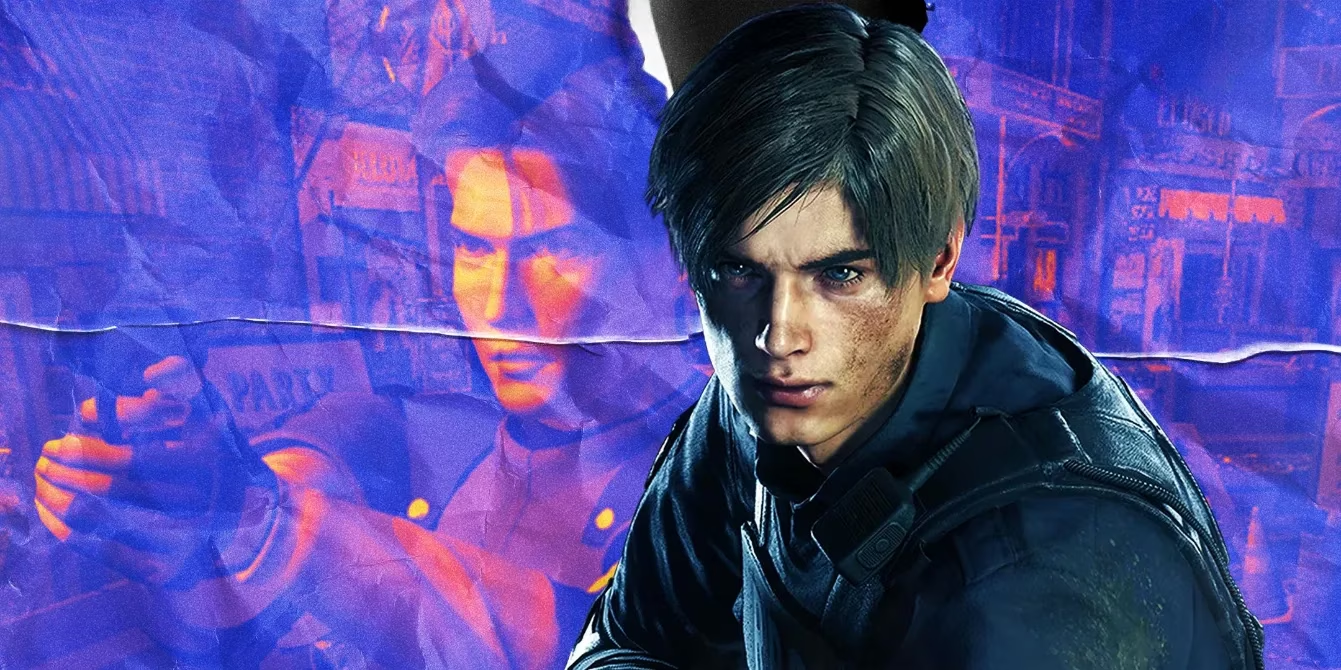
The Resident Evil saga is a sprawling, continuous chronicle. While entries like Resident Evil 7 and Village have pivoted perspectives and intensified horror, they've always built upon the same core narrative bedrock laid in 1996. This makes the prior inaccessibility of the PS1 sequels so puzzling. How can you fully appreciate the legacy of characters like Leon S. Kennedy or the origins of Raccoon City's demise if the chapters are missing? Capcom's strategy of ground-up remakes for the first four numbered games was a partial solution, but in my view, it created a new dilemma.
Let's be clear: Resident Evil 2 (1998) and Resident Evil 2 (2019) are siblings in name only. Playing them back-to-back is a study in gaming evolution.
| Feature | Original PS1 Version (1998) | Modern Remake (2019) |
|---|---|---|
| Controls | Classic tank controls | Fluid, over-the-shoulder third-person |
| Perspective | Fixed, cinematic camera angles | Dynamic, player-controlled camera |
| Combat | Stop to shoot | Shoot while moving |
| Visuals | Charming, blocky polygons | Hyper-realistic, detailed graphics |
| Dialogue | Quintessential '90s B-movie camp | Modern, self-aware camp |
The original games are a product of their time, demanding a different kind of skill and patience. The tension comes from navigating claustrophobic halls with a limited field of view, the dread amplified by not knowing what lurks just off-screen. The remake, while masterful, offers a different, more immediate kind of fear. It's the difference between hearing a story told around a campfire and being thrust into a high-budget horror film.
This brings me to a crucial point: these remakes are not preservation. I adore them—yes, even the more condensed Resident Evil 3 remake—but they are entirely new creations. They are magnificent cathedrals built upon ancient, revered ruins. The foundation is there, but the structure, the artistry, and the experience are fundamentally different. They don't preserve the original artifact; they reinterpret it for a new audience.
The distinction becomes even sharper when you compare them to something like Final Fantasy VII Remake. That project was a meta-commentary, a direct dialogue between the developers' past and present selves, using narrative devices within the game to acknowledge and alter the original story. The Resident Evil remakes don't operate on that level. They present themselves straightforwardly as the "new version," often leading players to believe they've experienced the classic. And while many will understandably prefer the modern iterations, that choice should be informed. Now, thanks to GOG, it can be.
Having the originals readily available is vital for several reasons:
-
Historical Context: They are primary sources for understanding the series' evolution.
-
Game Design Study: They showcase how technical constraints bred creative solutions in atmosphere and tension.
-
Pure Nostalgia: For veterans, it's a direct portal back to 1998, jank and all.
-
Consumer Choice: Players can decide for themselves which version they prefer.
In 2026, gaming's past feels more connected to its present than ever. Services like GOG performing this archival work ensure that foundational pieces of interactive history aren't lost to time or replaced entirely by their shinier counterparts. So, I'm diving back into the pixelated horrors of Raccoon City, not just to relive my past, but to preserve a piece of gaming's soul. The remakes are fantastic, but the originals are immortal. And now, finally, they're home. 🧟♂️🔫