Anatomy of Terror: Ranking Resident Evil 4 Remake's Most Memorable Boss Designs
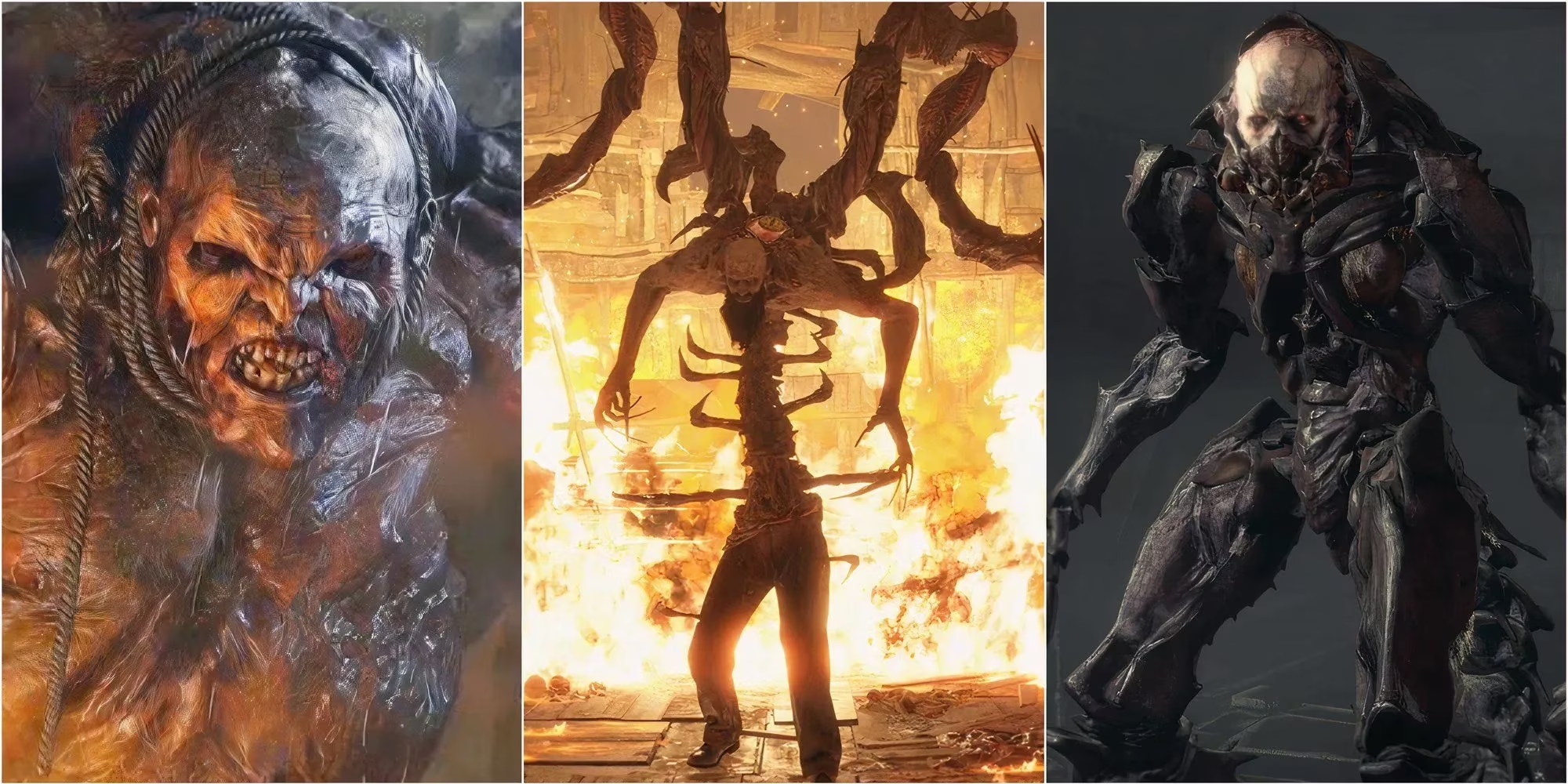
As Leon Kennedy navigates the treacherous path through rural villages, ancient castles, and isolated islands in his mission to rescue Ashley Graham, he encounters numerous monstrous adversaries that serve as formidable obstacles. These bosses represent the pinnacle of biological horror in the Resident Evil 4 Remake, each possessing distinct visual characteristics that elevate them beyond mere combat challenges. The game's artistic direction masterfully blends grotesque biological transformations with symbolic storytelling elements, creating enemies that haunt players long after the credits roll.
The Hierarchy of Horrors: Ranking System Explained
Each boss design is evaluated based on:
-
Visual Impact: Immediate frightening presence
-
Biological Creativity: Uniqueness of mutation design
-
Symbolic Depth: Story elements embedded in appearance
-
Memorability: Lasting impression on players
| Rank | Boss Name | Key Design Features | Horror Level |
|---|---|---|---|
| 7 | Krauser | Mutated arm transformations, military aesthetic | 🎯🎯 |
| 6 | El Gigante | Imposing size, restraint ropes, armored variants | 🎯🎯🎯 |
| 5 | Del Lago | Aquatic adaptation, massive jaws, back tentacles | 🎯🎯🎯🎯 |
| 4 | Salazar | Plaga fusion, spider-like tentacles, central mouth | 🎯🎯🎯🎯🎯 |
| 3 | Saddler | Spider legs, scaled body, recognizable face | 🎯🎯🎯🎯 |
| 2 | Mendez | Extended ribcage, dangling limbs, cult symbolism | 🎯🎯🎯🎯🎯 |
| 1 | Verdugo | Sleek predator design, glowing eyes, mobility | 🎯🎯🎯🎯🎯🎯🎯 |
The Science of Scare: Design Philosophy
Capcom's approach to boss design in the remake demonstrates an evolution in horror aesthetics. Unlike traditional monsters, these creations function like biological Rube Goldberg machines - complex systems where each mutation serves both practical combat purposes and psychological terror. The developers have crafted creatures that feel like nightmarish Swiss Army knives, with every appendage and transformation serving multiple frightening functions.
Seventh Place: Jack Krauser's Controlled Mutation
Krauser represents a fascinating middle ground between human and monster. His initial appearance maintains military professionalism, but the mutation reveals itself through his adaptable arm that shifts between offensive and defensive forms like a living multipurpose tool. This controlled transformation symbolizes his disciplined approach to power, making him more calculated predator than mindless beast.
Sixth Place: El Gigante's Brute Force Design
El Gigante's effectiveness lies in its sheer scale rather than intricate details. The ropes binding its neck serve as subtle storytelling elements, suggesting its treatment as a domesticated weapon. When armored variants appear later, they demonstrate the Ganados' tactical adaptation, turning these creatures into walking medieval fortresses that dominate the battlefield through pure presence.
Fifth Place: Del Lago's Aquatic Horror
Del Lago's design excels in environmental integration. Its massive salamander form embodies the terror of deep water predators, with teeth resembling industrial pile drivers and tentacles demonstrating the Plaga's pervasive influence. The creature's preference for remaining submerged creates anticipation that makes its full reveal particularly impactful.
🥈 Fourth Place: Ramón Salazar's Fusion Nightmare
Salazar's transformation represents one of the game's most creative mutations. His fusion with the Plaga creates a spider-like entity with Salazar's face centered in a massive three-way mouth. The design functions like a biological chandelier of horror, with tentacles radiating throughout the combat arena, creating both visual spectacle and tactical challenge.
Third Place: Osmund Saddler's Supreme Form
Saddler's final manifestation as a spider-legged monstrosity maintains just enough of his human features to be unsettling. The scaled body and glowing weak points create a design that feels both ancient and alien. His transformation serves as the religious iconography of corruption made flesh, representing the ultimate price of power sought through the Plaga.
🥈 Second Place: Bitores Mendez's Body Horror
Mendez's design stands as a masterpiece of biological distortion. The extended ribcage with spiky claws and dangling limbs creates a silhouette that resembles both insect and broken puppet. Most remarkably, the overall form subtly mirrors the Los Illuminados symbol, making his body a walking testament to his cult devotion - a transformation that literally embodies his beliefs.
🥇 First Place: Verdugo's Perfect Predator
Verdugo represents the pinnacle of the remake's design philosophy. His sleek, humanoid yet clearly monstrous appearance creates immediate unease. The glowing red eyes and sharp claws suggest precision rather than brute force, while his incredible mobility makes him feel like a surgical instrument of death. Verdugo's design succeeds because it balances familiarity with alien horror, creating a creature that feels both intelligent and instinctively predatory.
🎨 The Art of Fear: Comparative Analysis
What makes these designs particularly effective is their relationship to gameplay:
Scale vs. Precision:
-
Large bosses (El Gigante, Del Lago) create spectacle
-
Human-sized bosses (Verdugo, Krauser) enable intimate combat
Biological Themes:
-
Insectoid elements (Mendez, Saddler) evoke disgust
-
Aquatic adaptations (Del Lago) tap into thalassophobia
-
Mammalian distortions (Krauser) feel uncomfortably familiar
🔮 The Legacy of Terror
The Resident Evil 4 Remake's boss designs represent a significant evolution in video game horror aesthetics. Each creature serves as a testament to Capcom's understanding that true horror lies not just in grotesque appearances, but in designs that tell stories through their very biology. These creations function like architectural blueprints of nightmares - carefully constructed to maximize both visual impact and gameplay functionality.
As the gaming industry continues to push graphical boundaries, the Resident Evil 4 Remake stands as a benchmark for how technical capability can enhance artistic vision. The bosses aren't merely obstacles; they're moving paintings of biological horror that demonstrate how careful design can transform digital creatures into unforgettable experiences. Their lasting impact proves that in the realm of horror gaming, true artistry lies in making the unimaginable feel terrifyingly real.