How Resident Evil 2 Remake Redefined Survival Horror and Set a New Gold Standard for Game Remakes
It's 2026, and looking back, I can still vividly remember the electric anticipation that crackled through the gaming world back in 2018. For nearly two decades, we'd heard the whispers, the rumors that would flare up and then fizzle out. Could it really be happening? When the reveal finally came at E3, it felt like a dream realized. After all, wasn't the original Resident Evil remake on GameCube proof enough that Capcom could work magic? But Resident Evil 2 was different—it was a fan-favorite, a cornerstone of the survival horror genre. The pressure was immense. Yet, the release in 2019 didn't just meet expectations; it detonated them, kicking off a renaissance for the entire franchise and reshaping what we expect from a video game remake. Even now, after experiencing the thrilling updates to Resident Evil 3 and the masterful reinvention of Resident Evil 4, I keep coming back to one truth: Resident Evil 2 remains the untouchable gold standard. What is it about this remake that feels so timeless, so perfectly balanced between honoring the past and forging a terrifyingly new future?
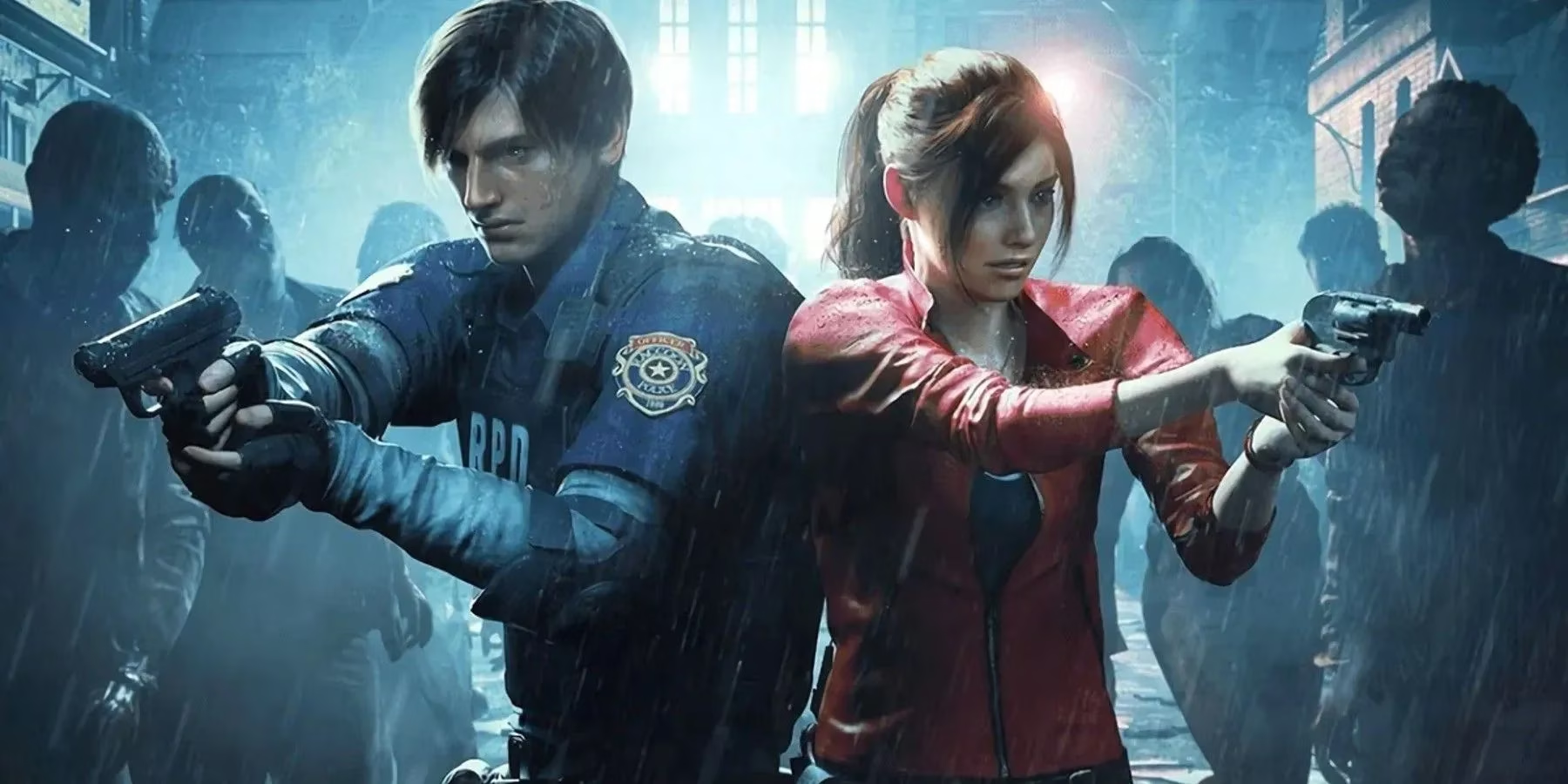
The genius of Resident Evil 2's remake lies in its deceptive familiarity. Capcom didn't just give the 1998 classic a shiny new coat of paint. They meticulously rebuilt it from the ground up, using modern technology to amplify its core horrors while masterfully playing with player nostalgia. You step into the rain-soaked streets of Raccoon City, and the memories flood back—the eerie police station lobby, the unsettling quiet of the halls. It feels like coming home. But then, the cracks begin to show. The layout is eerily similar, yet subtly rearranged. Corridors you thought you knew lead to new terrors. This isn't a simple 1:1 recreation; it's a clever re-imagining that keeps even the most seasoned veterans on their toes. The developers understood that true homage isn't about replication—it's about capturing the feeling of the original while having the courage to innovate. They preserved the survival horror essence—the careful resource management, the tense atmosphere, the puzzle-solving—but wrapped it in an experience that felt utterly contemporary and relentlessly terrifying.
This careful balance didn't just set a new bar for the Resident Evil series; it sent shockwaves through the entire industry. Before 2019, a remake was often seen as a safe bet: update the graphics, maybe tweak a few controls, and re-release. Resident Evil 2 demanded more. It proved that a remake could be a definitive artistic statement, a game that could potentially surpass its source material. Think about it: since its release, haven't we seen a dramatic shift in quality and ambition for remakes? Look at the incredible work done on Demon's Souls and the 2023 Dead Space remake. These are titles that followed the blueprint RE2 helped draft—respect the original's soul, but don't be afraid to rebuild its body for a new era. The "video game remake" was elevated from a mere commercial product to an art form in its own right.
Now, let's talk about the single most transformative element of the remake: Mr. X. In the original PlayStation game, he was largely confined to a specific scenario. But in the remake? He becomes the relentless, pacing heartbeat of the entire police station segment. The developers brilliantly lulled players into a false sense of security in the early game, letting us rely on our nostalgic knowledge. Then, they pulled the rug out from under us. The first time you hear those heavy, metallic footsteps echoing through the halls—thud... thud... THUD—a new kind of dread sets in. This wasn't scripted; this was systemic terror. Mr. X was an unscripted force of nature, patrolling the environment, responding to sound, and forcing a complete tactical shift. You couldn't just methodically clear rooms anymore. You had to hide, you had to run, you had to listen. His presence turned familiar spaces into terrifying labyrinths where safety was always temporary. Few gaming moments in the last decade are as perfectly executed and universally terrifying as trying to solve a puzzle while those footsteps grow louder and louder in the hallway outside.
| Aspect | Original (1998) | Remake (2019) | Impact of Change |
|---|---|---|---|
| Gameplay Perspective | Fixed camera angles | Over-the-shoulder, third-person | Creates immediacy and deeper immersion in the horror. |
| Mr. X Encounter | Largely scripted, scenario B exclusive | Dynamic, unscripted stalker throughout main game | Introduces systemic, unpredictable terror that reshapes gameplay. |
| Visual & Audio Fidelity | Pre-rendered backgrounds, low-poly models | Fully 3D, photorealistic environments, advanced lighting & sound design | Atmosphere becomes denser, more oppressive, and visually stunning. |
| Player Nostalgia | The source material. | Used as a tool to subvert expectations. | Enhances surprise and fear for both new and returning players. |
Five years later, as I replay it in 2026, its status is only cemented. It's that rare masterpiece that achieves the impossible: it makes the original, legendary game feel almost like a prototype. It's not just one of the best remakes ever made; it stands tall as one of the crowning achievements of the entire Resident Evil series. Every decision—from the gut-wrenching sound design to the way light and shadow sculpt the dread in the corridors—feels intentional. It showed Capcom, and the world, a winning formula: root your remake firmly in the survival horror soil of the original, but don't be afraid to let new, terrifying ideas grow. The legacy of Resident Evil 2 isn't just in the fantastic games it inspired within its own franchise; it's in the elevated expectations it created for all of us as players. Now, when a remake is announced, we don't just ask, "Will it look better?" We ask, "Will it make us feel that same brilliant mix of nostalgic comfort and abject terror?" And that, perhaps, is the highest praise of all. :skull: :video_game: