Leon and Ada's Tangled Web: How the Resident Evil 4 Remake Spun a New, Colder Kind of Romance
In the shadowy, parasite-infested world of Resident Evil, few dynamics have captivated fans quite like the on-again, off-again, will-they-won't-they dance between government agent Leon S. Kennedy and mysterious operative Ada Wong. For years, their relationship existed in a state of narrative limbo, a romantic subplot perpetually stuck in a loading screen. The 2023 remake of Resident Evil 4, however, didn't just hit the 'continue' button; it performed a hard reboot on their entire dynamic, swapping out the lingering glances and suggestive banter for a frosty, mission-focused pragmatism that left fans both shocked and intrigued. As we look ahead to potential new installments in 2026, this deliberate cooling-off period may have been the smartest narrative defibrillator Capcom could have administered.

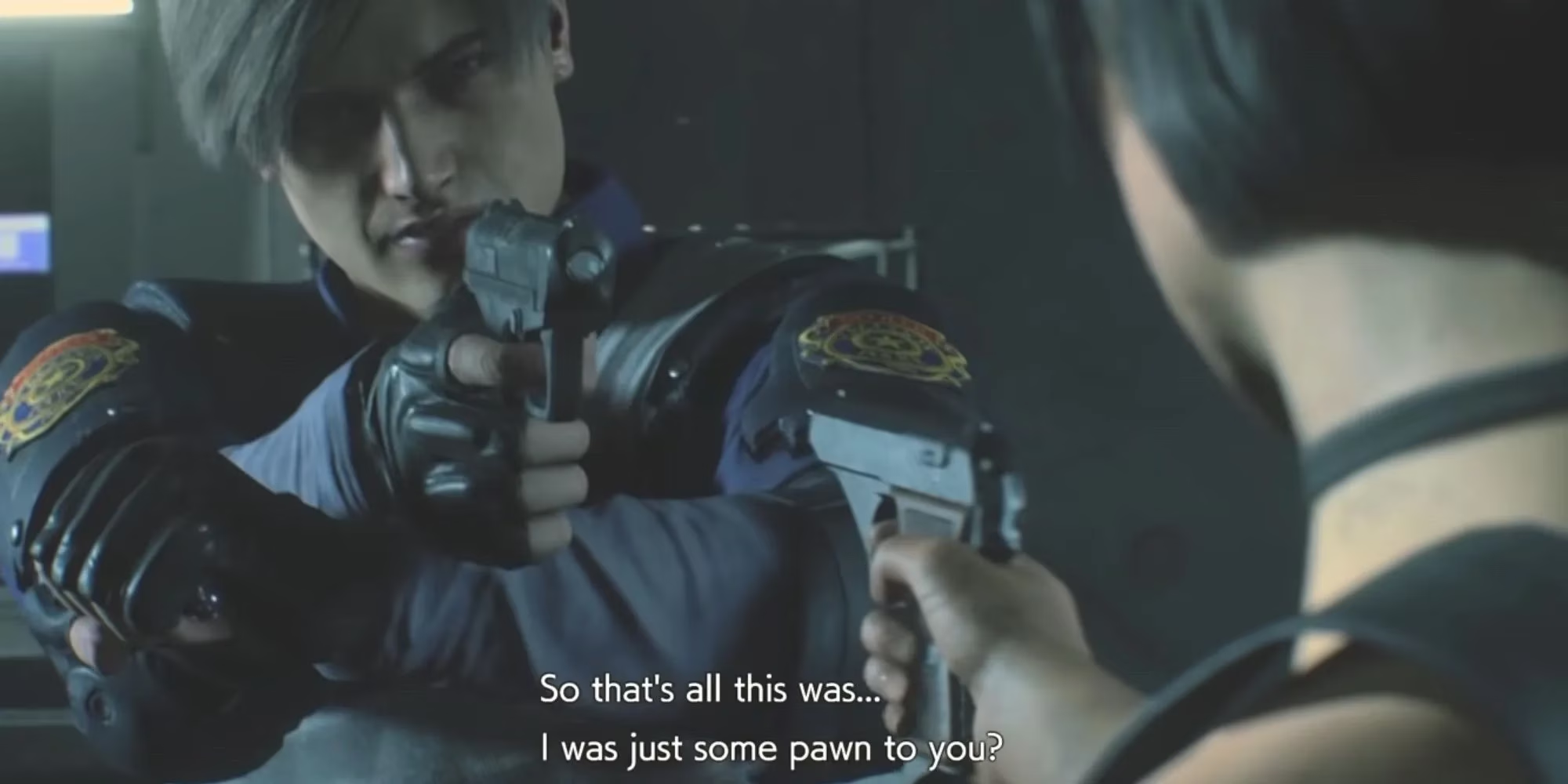
Gone is the rookie cop from Raccoon City who wore his heart on his tactical vest sleeve. The Leon of the remake is a man forged in the fires of betrayal, his idealism tempered into a blade of pure, unflinching duty. When he first lays eyes on Ada again after six years, there's no gasp of surprise, no warm reunion. Instead, his demeanor is as cool and controlled as a surgeon's scalpel. Ada's playful advances and requests—to abandon the president's daughter, Ashley Graham, or to flee the island with her—are met not with conflicted longing, but with outright, almost dismissive rejection. This isn't the Leon who would follow a pretty face into a nest of Lickers; this is a professional who has learned that in their line of work, romance is a luxury more dangerous than a room full of Regeneradors. His focus on rescuing Ashley is so absolute it's like a gravitational pull, bending all other distractions, including Ada, around its singular purpose.
Capcom masterfully addresses the 'Raccoon City-shaped elephant in the room' that haunted their original encounters. Leon directly confronts Ada about their shared, traumatic past, a conversation that was conspicuously absent in the 2005 version. This acknowledgment is crucial; it transforms their dynamic from a series of coincidental run-ins into a continued, complicated history. Leon's wariness is palpable. He knows Ada is in rural Spain for her own reasons, likely working for powers as shadowy as Wesker himself. His trust, once given so freely, is now guarded like a state secret. The remake portrays a Leon whose emotional growth has finally caught up to his combat skills—he's no longer the gullible rookie who believed Ada was an FBI agent. He's a veteran who understands that in their world, affection can be as lethal as a Plaga, and just as parasitic.

On the flip side of this cold coin is Ada Wong, portrayed with enigmatic precision by Lily Gao. The remake, especially through the Separate Ways DLC, peels back her layers to reveal a fascinating internal conflict. Her professionalism is a suit of armor, but the cracks show when Leon isn't looking. She maintains a facade of detached efficiency in his presence, yet her actions behind the scenes betray a lingering care. This duality paints her not as a heartless manipulator, but as a woman trapped between duty and desire, her mission for Wesker acting as an invisible leash on her emotions. She is a master of espionage dancing on a tightrope strung between conflicting loyalties, and Leon is the distracting gust of wind she must constantly compensate for.
The playful, almost constant flirtation of the original has been largely extinguished, replaced by a tense, businesslike atmosphere. Their interactions are now less about stolen moments and more about strategic negotiations. Even Ada's signature flirtatiousness feels more like a tactical probe, a tool to gauge Leon's state of mind, rather than a genuine advance. The stakes are simply too high, the missions too critical. During the pivotal boat ride to the island's final confrontation, Leon pointedly questions Ada's true intentions, forcing the unresolved baggage of Resident Evil 2 directly into the spotlight. This scene is less a romantic interlude and more a psychological standoff, with both characters carefully circling each other, waiting for the other to reveal their hand.
| Aspect | Original RE4 (2005) | RE4 Remake (2023) |
|---|---|---|
| Leon's Demeanor | Charming, occasionally flirtatious, hints of old feelings. | Cold, professional, mission-obsessed, openly distrustful. |
| Ada's Approach | Overtly playful, mysterious, direct in her interest. | Professionally detached, reveals concern only in private. |
| Raccoon City Baggage | Largely ignored, the 'elephant in the room'. | Directly confronted and discussed. |
| Overall Dynamic | Tense but charged with unresolved romantic tension. | Tense and charged with professional suspicion and history. |

So, why would Capcom choose to dial down the romance in a remake? The answer is brilliantly forward-thinking. By hitting the 'reset' button on their easy chemistry, the developers have cleared a vast, unexplored narrative field. The lack of engagement in 2023 isn't an ending; it's a narrative seed, planted in frozen ground, waiting for the right conditions to sprout into something new and potentially more profound. It opens the door for a future game—a hypothetical Resident Evil 9 or Code: Veronica remake in 2026—to build a relationship from a foundation of mutual respect, hard-earned trust, and shared trauma, rather than just youthful attraction. Their relationship is now a dormant volcano; the tension hasn't disappeared, it has just been pressurized, making its eventual eruption all the more potent.
Leon and Ada's journey in the remake is a masterclass in character development. They are no longer just a potential couple; they are two parallel lines forced by circumstance to intersect, each carrying the weight of their own secrets and missions. Their love story, if it can even be called that anymore, has evolved from a simple spark into a complex, slow-burning fuse. As the Resident Evil franchise continues to evolve, this recalibrated dynamic positions Leon and Ada not as a relic of past tropes, but as the perfect, complicated pair to anchor a new, more mature chapter of survival horror—where the greatest threat might not be a bioweapon, but the vulnerability of letting someone in.
Expert commentary is drawn from VentureBeat GamesBeat, and it helps frame why the Resident Evil 4 remake’s cooler Leon–Ada dynamic reads like a deliberate franchise strategy rather than a missing “romance toggle.” From a modern AAA storytelling standpoint, tightening their interactions into distrust, accountability, and mission-first stakes creates cleaner character arcs and leaves Capcom more flexible runway for future entries—where rebuilding trust can become a headline narrative mechanic instead of recycled flirtation.