Resident Evil 5 Remake: A Delicate Balance Between Action Legacy and Modern Horror Expectations
As the year 2026 unfolds, the conversation within the Resident Evil community continues to circle a pivotal question: what's next for Capcom's acclaimed remake series? With the phenomenal success of the Resident Evil 2, 3, and 4 remakes firmly establishing a new golden standard, the logical next step points directly towards the sun-baked, co-op action of Resident Evil 5. This title, once a commercial juggernaut, now stands at a fascinating crossroads. It represents a period of substantial distinction for the franchise—a deliberate, and ultimately divisive, departure from its survival-horror roots into more action-oriented territory. The success of Resident Evil 7 and the subsequent Village, however, has firmly re-anchored the mainline series in horror, creating a unique challenge for any potential remake of the fifth installment. Capcom now walks a creative tightrope, tasked with honoring the original's identity while potentially reimagining it for an audience that has enthusiastically embraced the series' return to its terrifying origins.
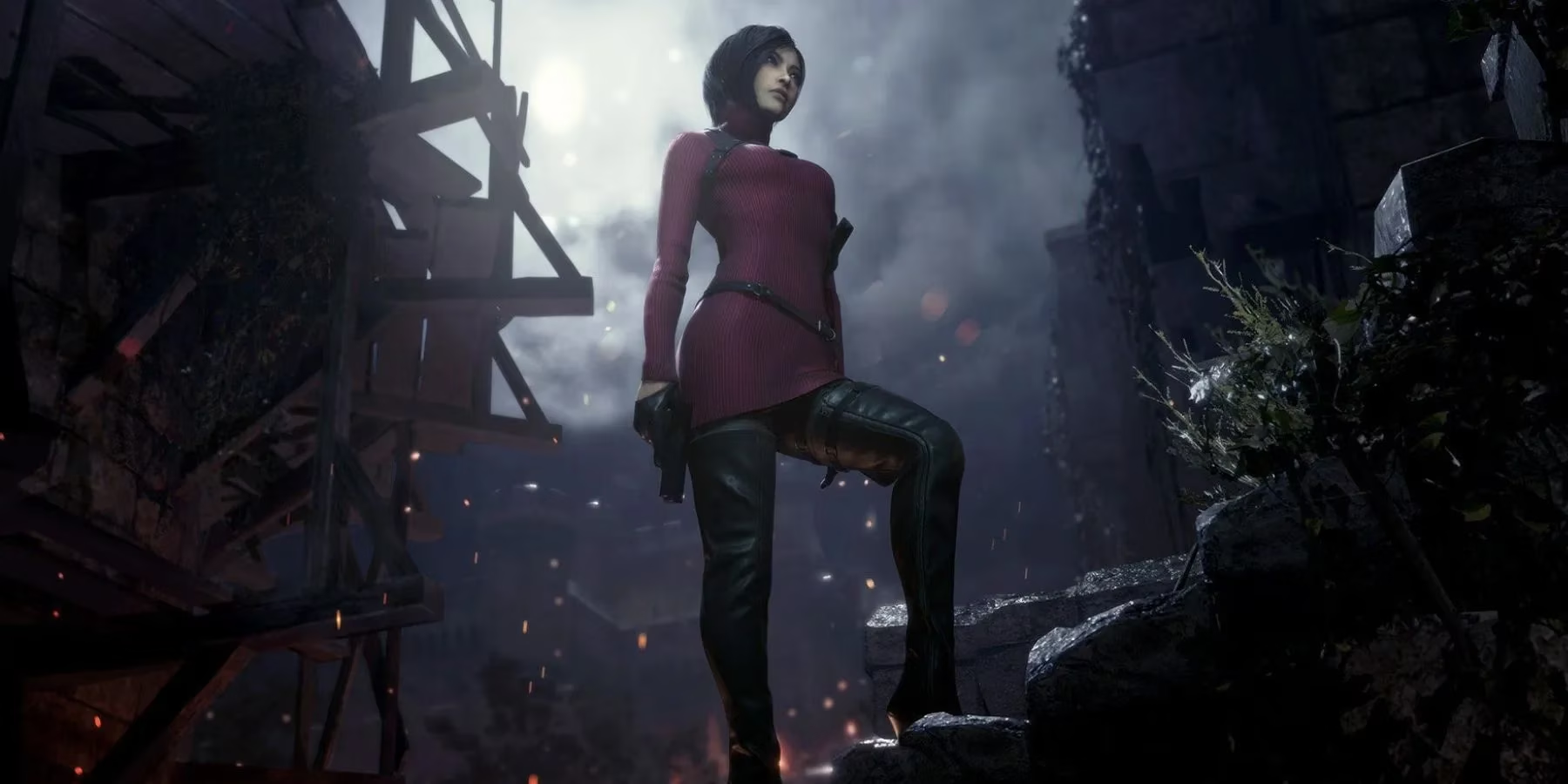
The legacy of Resident Evil 5 is complex. In its day, it was incredibly successful, pushing the boundaries of co-operative gameplay and delivering blockbuster set-pieces. Yet, as time has passed, fan perception has grown contentious. Many view its shift towards relentless action as alienating from the franchise's core survival-horror DNA. However, this divergence was arguably necessary. The series needed these experimental entries to branch out from restrictive genre expectations and explore new horizons. Now, with the IP having triumphantly returned to horror in mainline entries, the remake of Resident Evil 4 has demonstrated a crucial blueprint: Capcom's modern remake continuity possesses the tools to reimagine even the most action-heavy chapters in a less jarring, more atmospherically cohesive manner.
This capability is more important than ever. Fans are deeply pleased with the seamless, terrifying transition marked by entries like the delightfully gruesome Resident Evil 7. Abruptly whisking players back to a purely action-oriented atmosphere could be seen as a disappointing regression. Therefore, the greatest boon offered by these modern remakes is their power to allow Resident Evil to reimagine itself. They can rectify historical grievances without completely eschewing a title's unique identity. For Resident Evil 5, this likely means infusing its familiar African setting and co-op gameplay with a heightened sense of dread, resource management, and atmospheric horror that was less prevalent in the 2009 original.
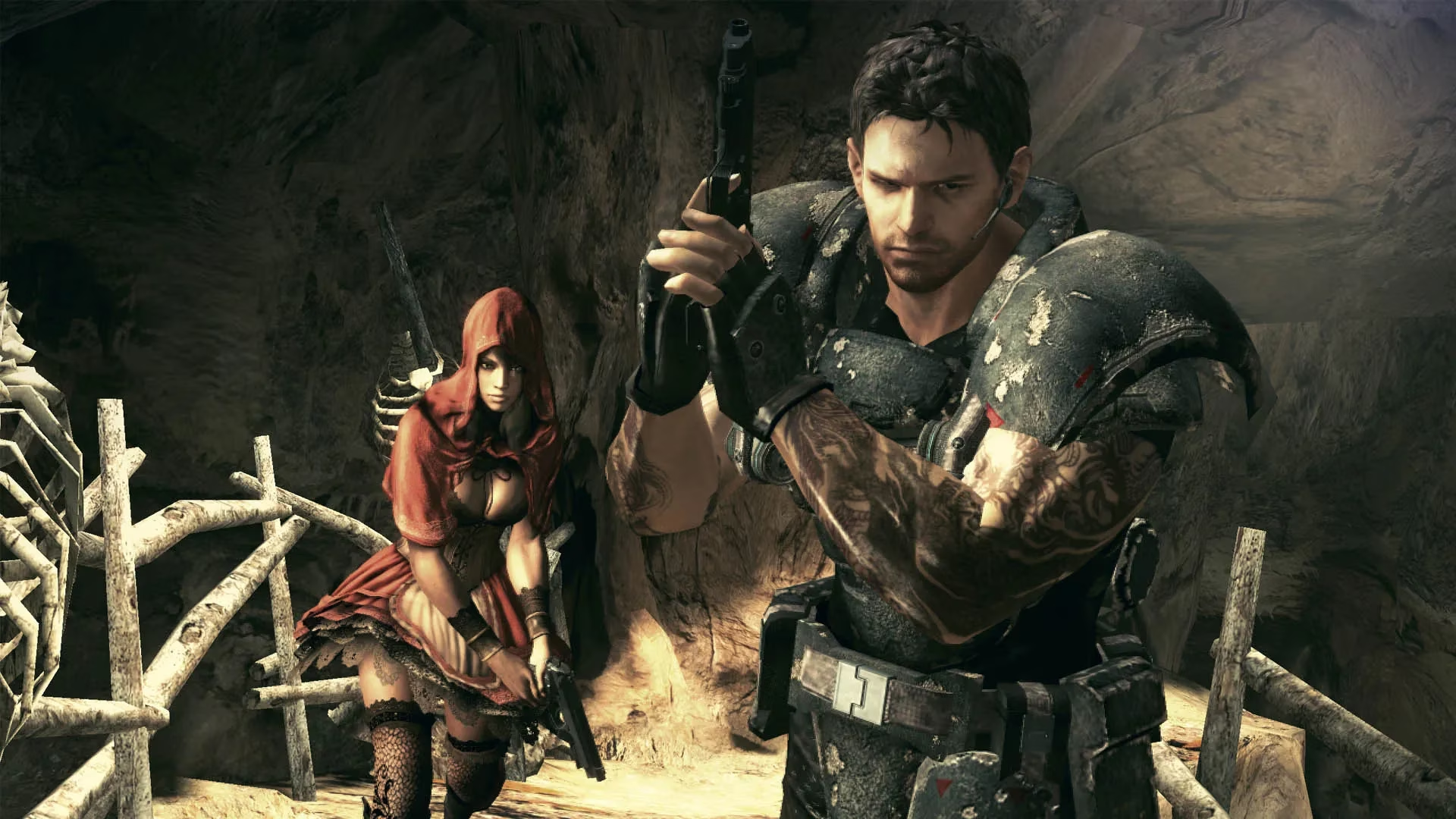
The potential remake will be wholly interesting because its chosen direction could inspire a shift in the entire remake continuity's storytelling approach. Consider the following comparative evolution:
| Original Game Era | Modern Remake Treatment | Potential RE5 Remake Shift |
|---|---|---|
| RE4: Action-Horror Balance | RE4 Remake: Leaned heavier into horror | RE5 Remake: Could significantly amplify horror elements |
| RE5: Full action focus | ??? | Likely a rebalanced hybrid |
| Campy, tropey characters | Characters retained charm, felt more grounded | Must balance modern realism with iconic camp |
Resident Evil 4's remake already leaned more toward psychological tension and visceral horror than its original. A Resident Evil 5 remake adopting a comparable, or even more intense, atmospheric shift would be a logical and prevalent evolution. However, Capcom must avoid, without fail, the critical misstep of cutting crucial content—a lesson harshly learned from the condensed experience of the Resident Evil 3 remake. The epic scope of RE5, from the claustrophobic marshlands to the sprawling volcanic finale, must be preserved and enhanced.
Achieving this balance extends to its iconic, if eccentric, cast of characters. Capcom has shown a deft hand at adapting characters for modern sensibilities. Leon Kennedy in the RE4 remake retained his charm but gained layers of weary realism. The key is evolution, not eradication. 🎭 Changing core aspects of Chris Redfield's determined resolve or Sheva Alomar's partnership dynamic now would be too severe a diversion from the source material. Yet, as seen with Resident Evil 4's Albert Wesker—who remains every bit as gloriously tropey and sinister—Capcom may be signaling that a certain level of nostalgic, campy flair is not only acceptable but expected in these remake entries.
This presents a compelling potential future for the franchise:
-
Mainline Games (e.g., Resident Evil 7, 8, 9): The primary concentration on innovative, first-person (or new) horror experiences, exploring fresh corners of body horror and gothic fantasy.
-
Remake Continuity (e.g., RE2, 3, 4, 5 Remakes): A space to revel in campy, nostalgic action-horror, modernizing classic stories and gameplay while preserving their distinctive, sometimes B-movie, spirit.
In this framework, a Resident Evil 5 remake wouldn't need to fully metamorphose into a pure survival-horror title. Instead, it could become the definitive, balanced version of itself—a tense, cooperative action-horror experience that learns from both its own past and the series' present. It would honor the original's groundbreaking partnership gameplay and epic scale while draping its world in the oppressive, resource-conscious atmosphere that defines modern Resident Evil. As of 2026, the ball is in Capcom's court. The success of their past remakes has built immense trust, but the journey to Kijuju will require their most careful balancing act yet, one that respects the legacy of what was while fully embracing the terrifying potential of what could be.