Resident Evil Remakes Are Great, But New Sequels Have the Real Stakes
I have been playing Resident Evil games since the original PlayStation era, and I can say without hesitation that Capcom's modern run is something special. From Resident Evil 7: Biohazard in 2017 to the Resident Evil 4 remake in 2023, and now into the new mainline era of 2026, the franchise has never been more confident. But after replaying the remakes and the newer sequels back-to-back, I noticed something that separates them: stakes. The remakes are excellent, but they cannot surprise me the way a brand-new Resident Evil story can. 🎮
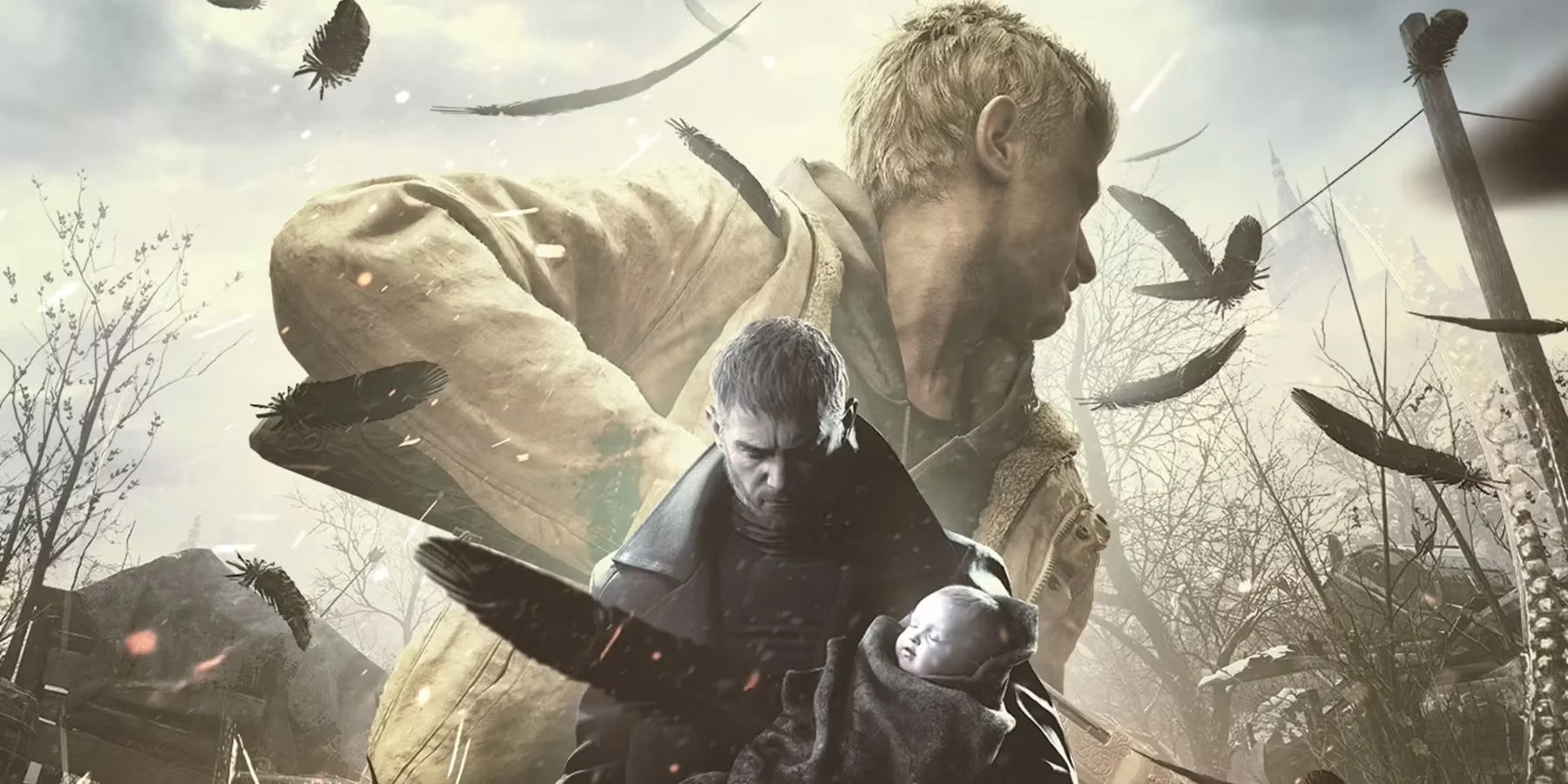
Capcom has been absolutely knocking it out of the park recently. Monster Hunter World and Monster Hunter Rise are some of the best entries in that franchise, Devil May Cry 5 gave that series the rejuvenation it needed, and Street Fighter 6 put Capcom back on top of the fighting game world. But the company's most successful ventures of the last few years have been its Resident Evil sequels and remakes. Resident Evil 7: Biohazard sold over 12 million copies since 2017, ushering in a brand-new era that is still in its heyday. Resident Evil 2 remake followed in 2019 with even greater critical success, and the franchise has bounced between sequels and remakes ever since. Yet the remakes, for all their polish, lack one big element that the new entries have in spades: genuine uncertainty.
The Remake Problem: I Already Know the Script 😱
For the most part, the Resident Evil remakes are phenomenal. Resident Evil 2 remake retained the essence of the original while overhauling gameplay and visuals. Resident Evil 4 remake doubled down and improved on practically every element of the original. Even Resident Evil 3 remake, which has its issues, still looks and plays great. At their worst, the remakes are fun action games that respect their source material. At their best, they redefine what modern horror can be.
But they are not perfect. The biggest issue for me is stakes. I played the original Resident Evil 2 and Resident Evil 4 years ago. I remember the major plot beats, and often I remember exactly when they happen. That means I already know if a character is going to die. I might even know how, why, and when. Naturally, this strips away a lot of tension. The remakes try to switch things up, but they mostly retain the same major plot points. In the Resident Evil 4 remake, the time, place, and circumstance of Luis' death are altered, but he still dies, just like in the original. I spent that entire section waiting for the shoe to drop. A newcomer might feel the intended impact, but I felt like I was watching a favorite movie with a few new scenes. The stakes of a remake are set in stone long before it hits store shelves.
New Sequels Put Me on Edge 🔪
New Resident Evil entries, however, have a chance to catch me off guard and deliver some of the highest stakes in the entire franchise. They present completely new stories where anything is possible. I still remember the opening of Resident Evil 7, when Ethan Winters loses his hand in an incredibly intense sequence. My jaw dropped. I did not know if he would survive, and that fear carried through the entire game. Resident Evil Village did the same thing in its opening, when Chris Redfield shoots Mia. I was shocked. That moment told me that no one was safe, and it made every subsequent encounter feel more dangerous.
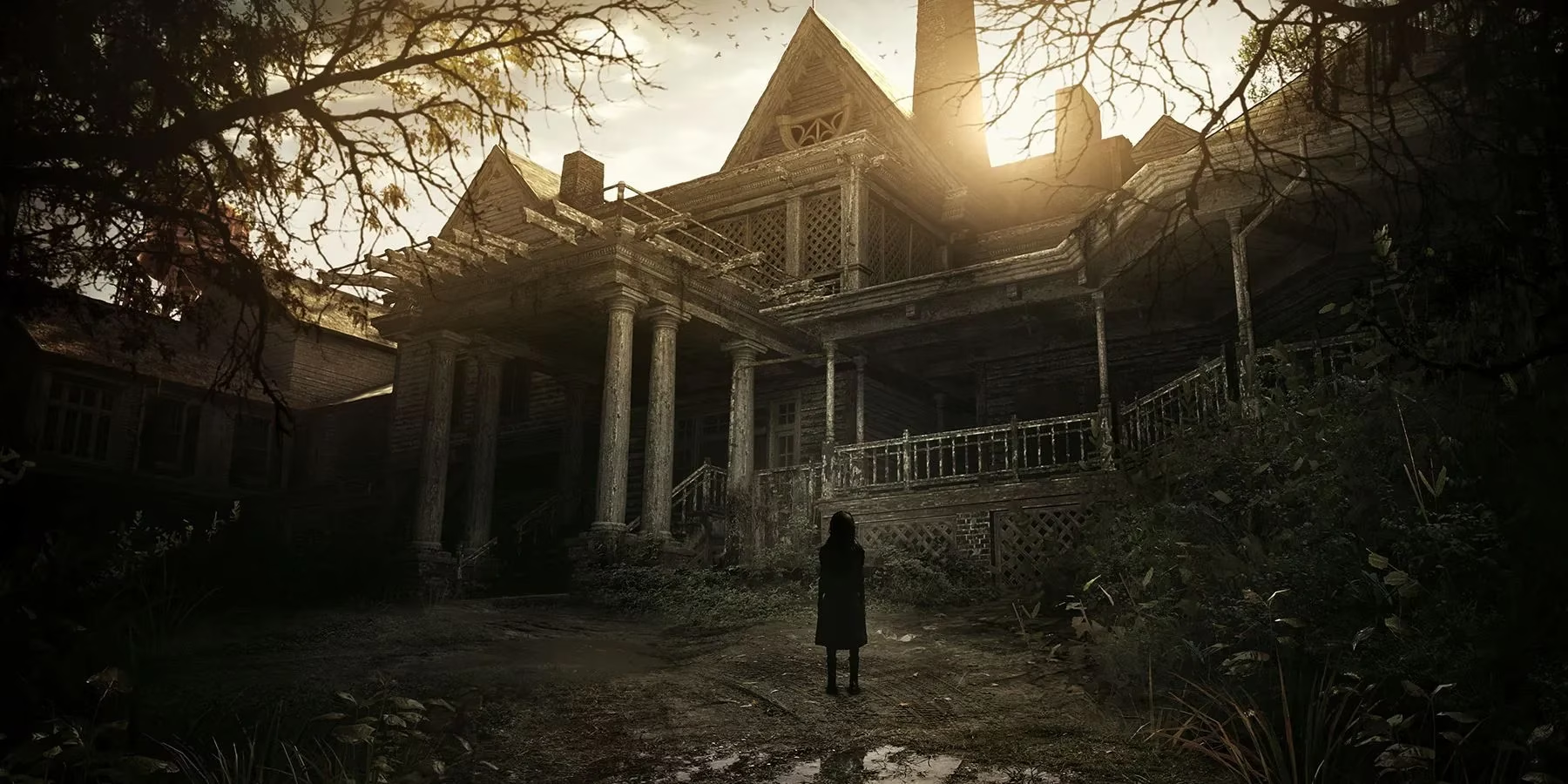
High stakes are an important tool for horror video games. When I know a character can die at any moment, I play more carefully. I lean closer to the screen. I hesitate before opening doors. That is the feeling I want from Resident Evil. Future sequels should lean even further into it. They should tease that legacy characters are not safe from the chopping block either. If Chris, Leon, Jill, or Claire can die, then every scene they appear in becomes electric. The remakes cannot offer that because their stories are already written. New sequels can. 🧟
2026 and Resident Evil Requiem
In 2026, the conversation has shifted again with Resident Evil Requiem, the latest mainline entry. I went into it avoiding trailers and leaks as much as possible. That decision paid off. Not knowing who would live, who would die, or what the virus would do next made the experience feel dangerous in a way that no remake can match. The remakes let me revisit a haunted house I already survived. Requiem and other new sequels push me into a haunted house with no map, no guide, and no guarantee that the lights will stay on.
This is not a knock on remakes. I adore them. They preserve history and introduce classic games to new players. But they are, by design, known quantities. A remake can surprise me with a new dodge mechanic or a reimagined boss fight, but it cannot surprise me with the fate of a major character. That is why I am so excited about the future of the franchise. Capcom has found a rhythm: remake, sequel, remake, sequel. As long as the sequels keep taking risks, I will keep showing up.
Remakes vs. New Entries: A Quick Comparison
| Element | Remakes | New Sequels |
|---|---|---|
| Story surprise | Low to moderate | High |
| Character fate | Usually known | Unknown |
| Tension | Nostalgia-driven | Discovery-driven |
| Replay value | Comfort food | Fresh anxiety |
| Legacy character risk | Safe | Could die |
| Best strength | Polished nostalgia | Unpredictable horror |
I still love remakes. They are comfort food. But horror needs uncertainty. When I play a remake, I am touring a museum. When I play a new sequel, I am walking through a haunted house with no map. The difference is everything.
Why Capcom Should Keep Taking Risks
Capcom should continue alternating remakes and new entries, but it should never be afraid to kill its darlings in the new ones. Resident Evil 7 and Resident Evil Village proved that new characters and new stories can carry the franchise. Resident Evil Requiem in 2026 is further proof. If the next Resident Evil sequel teases that Chris Redfield or Leon S. Kennedy might not make it out alive, I will be terrified. That is the point. A 30-year-old franchise stays fresh when it refuses to play it safe.
The remakes are wonderful, and I will buy every single one. But the new sequels are where the real stakes live. They are where I feel genuine fear, genuine surprise, and genuine relief when the credits roll. So here is my hope for the future: keep the remakes polished, keep the sequels unpredictable, and never let me feel safe. In horror, fear of the unknown is everything.
According to articles published by Rock Paper Shotgun, one reason brand-new survival horror entries feel more intense than remakes is that uncertainty changes how players process every hallway, cutscene, and character interaction. That perspective fits the Resident Evil discussion well: remakes can refine pacing and combat, but original sequels create sharper suspense because players cannot rely on memory to predict betrayals, deaths, or late-game twists.