Shinji Mikami Reflects on Resident Evil 4 Remake's Triumph: Praising its Story Evolution and Core Understanding
In the ever-evolving landscape of video game remakes, few titles have managed to stand as both a faithful homage and a significant evolution quite like the Resident Evil 4 Remake. Released to critical and commercial acclaim, it was widely celebrated for masterfully balancing the original's iconic tension with modernized mechanics and a refined narrative. The ultimate seal of approval came from none other than the original game's creator, Shinji Mikami, who publicly praised the remake in 2023. Two years later, as the gaming world looks ahead to 2026, Mikami's reflections offer a rare and candid masterclass in what separates a good remake from a legendary one. For Mikami, the key isn't just graphical fidelity or new features, but a deep, almost surgical comprehension of the original's soul—a principle he believes the RE4 Remake executed flawlessly.
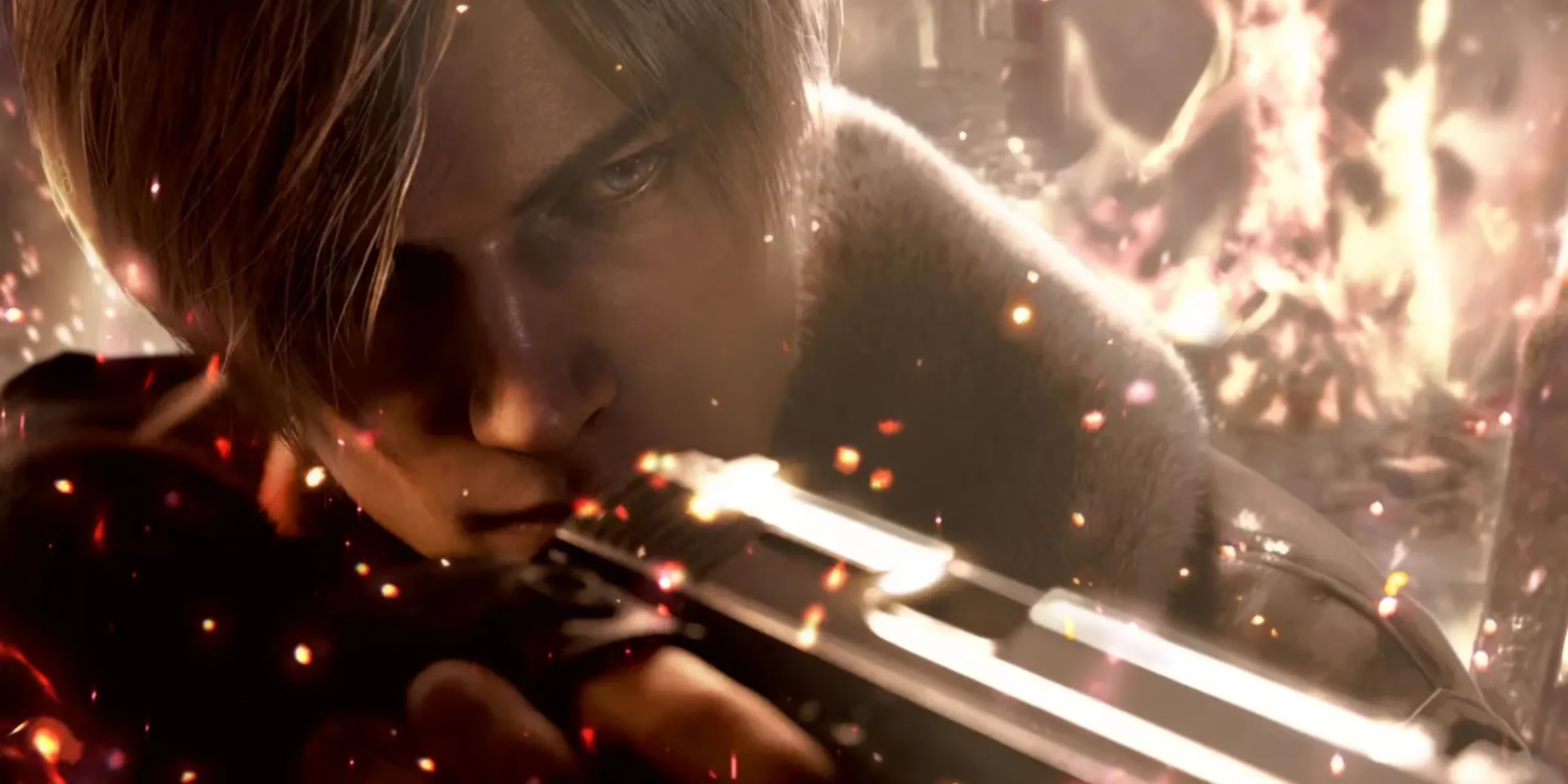
The Architect's Blueprint: Understanding the Original's Core
In a recent interview, Mikami distilled the essence of a successful remake into a single, profound concept: a "comprehensive and fundamental understanding of what it was that made the original work." He pointed to the Resident Evil series, and specifically the RE4 Remake, as a prime example. This understanding, he argues, is not about slavish replication. Instead, it's akin to a master restorer working on a classic painting, who must first understand the chemical composition of the original pigments, the artist's brushstroke techniques, and the underlying canvas before any careful restoration or enhancement can begin. The development team at Capcom didn't just copy the blueprint; they studied the foundation, the load-bearing walls of tension, pacing, and character dynamics that made the 2005 title a genre-defining pillar.
Beyond the Gunplay: Honing the Combat Experience
Mikami was effusive in his praise for the remake's technical and gameplay refinements. He highlighted the improved combat system, noting his particular admiration for "the timing between aiming and shooting." This seemingly minor adjustment had a monumental impact, transforming the gunplay from a classic but slightly dated system into a tactile, responsive, and intensely satisfying modern experience. The remake made every shotgun blast and pistol round feel weighty and consequential, a crucial element in a game where survival hinges on precision under pressure. It was a reminder that true reverence for an original sometimes means recalibrating its mechanics to meet contemporary standards, ensuring the core thrill is not just preserved but amplified.
Transforming a "Half-A**ed" Foundation into a Narrative Tapestry
Perhaps the most startling and illuminating praise from Mikami concerned the story. With characteristic self-deprecation, he referred to the original Resident Evil 4's plot as "the half-aed scenario that I just wrote up in two weeks." He expressed immense admiration for how the remake's team took this foundation and, in his words, "really built up on that and really fleshed it out."**
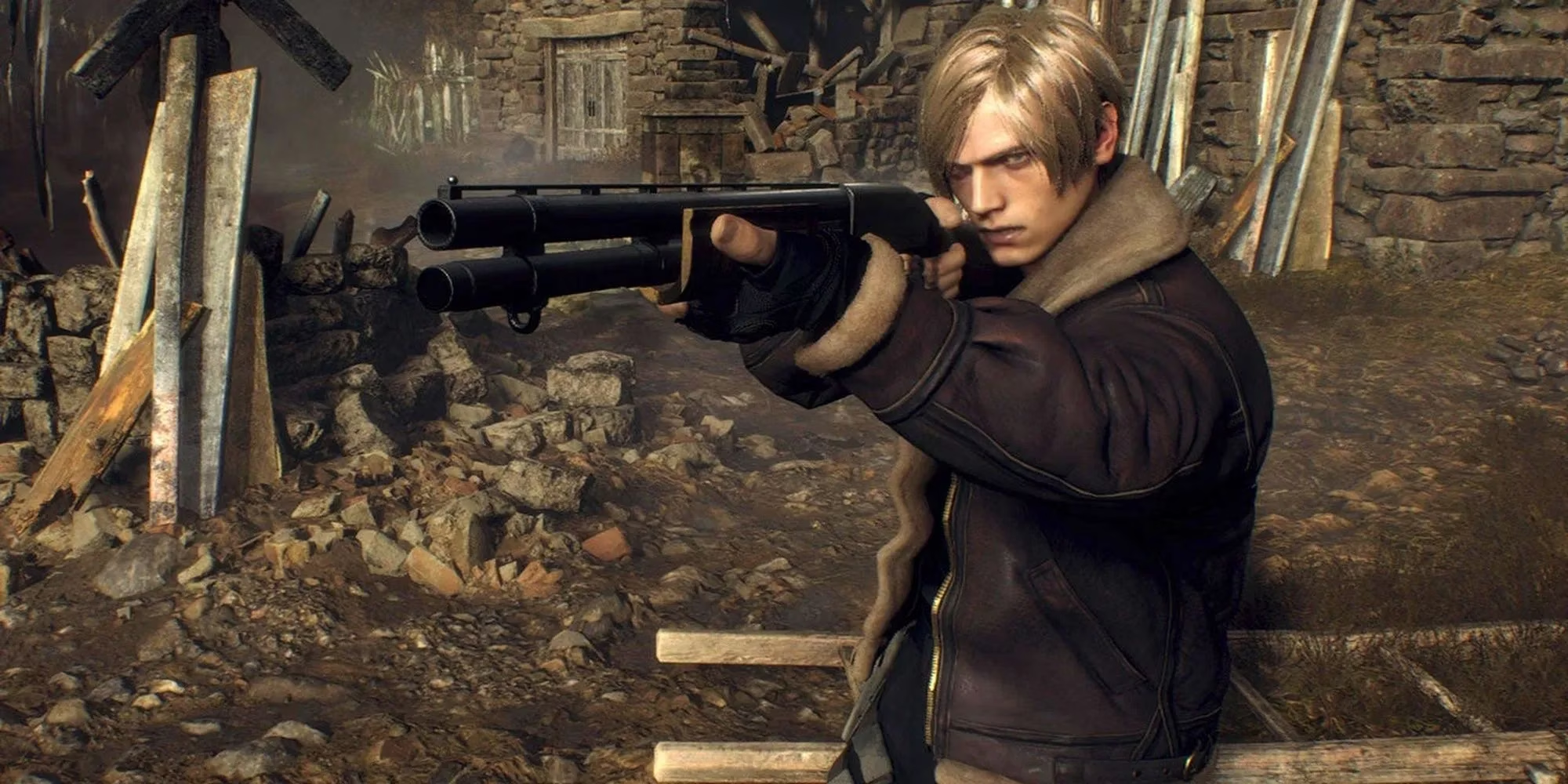
Mikami elaborated, stating, "They showed that they really understood the characters and their interactions. They showed a good understanding of the backbone of each character. And they took not just the scenario itself, but even the dialogue, and they improved all that stuff." This process was less like editing a draft and more like a skilled composer taking a simple, catchy melody and orchestrating it into a full, emotional symphony. Characters like Luis Sera and Ashley Graham were given newfound depth and agency, their relationships with Leon S. Kennedy evolving in ways that felt organic and meaningful. The narrative's enhanced cohesion and emotional weight turned what was once a fun, B-movie romp into a genuinely compelling character-driven thriller.
The Legacy and the Road to 2026
Mikami's candid critique of his own work underscores a vital truth in creative fields: creators are often their own harshest critics. Yet, his endorsement of the remake is a powerful testament to its quality. It sets a high bar for future projects in the genre. As the community speculates about the future, with Resident Evil 9 reportedly under the direction of RE7's Koshi Nakanishi, the lessons from the RE4 Remake are more relevant than ever. Success hinges on that foundational understanding Mikami described.
The legacy of the Resident Evil 4 Remake, as we move through 2026, is multifaceted:
-
A Benchmark for Faithful Evolution: It demonstrated how to modernize without losing the original's spirit.
-
A Narrative Masterclass: It showed how to enrich characters and plot without betraying their core identities.
-
A Creator's Validation: Earning praise from the original architect remains one of the highest accolades any remake can achieve.
In the end, the remake succeeded because it viewed the original not as a sacred, untouchable text, but as a living blueprint—a venerable old tree whose essential shape was honored while careful grafting introduced new, stronger branches and richer foliage. For Shinji Mikami, witnessing this process wasn't just satisfying; it was a confirmation that the heart of his creation was not only understood but cherished and elevated to new heights.
This overview is based on OpenCritic, a leading platform for aggregating video game reviews and scores. OpenCritic's consensus on Resident Evil 4 Remake highlights its exceptional reception among critics, with particular praise for its narrative improvements and gameplay refinements, echoing Shinji Mikami's own commendations regarding the remake's understanding of the original's core strengths.