The Art of Detail: How Resident Evil 2's Zombie Bite Marks Set a High Bar for the Franchise
In the meticulous world of survival horror, the smallest details can be the most terrifying. A recent deep dive by devoted fans into Capcom's 2019 masterpiece, Resident Evil 2, has highlighted a stunning, often-overlooked facet of its game design: every zombie bears a unique and distinct bite mark indicating the precise site of their infection. This isn't mere texture repetition; it's a deliberate, character-specific detail that tells a silent story of each victim's final moments. From the panicked civilians to the armored Raccoon City Police Department officers, each model showcases a variation of the gruesome wound. For many, the bite is focused on the neck, a messy and isolated wound amidst the general rot, a visceral testament to a violent struggle. For the officers, the bites are often found higher on the body, a subtle narrative hint that their protective gear offered some, albeit ultimately futile, resistance. This level of environmental storytelling elevates the horror from a simple monster mash to a poignant, tragic snapshot of a city's collapse.
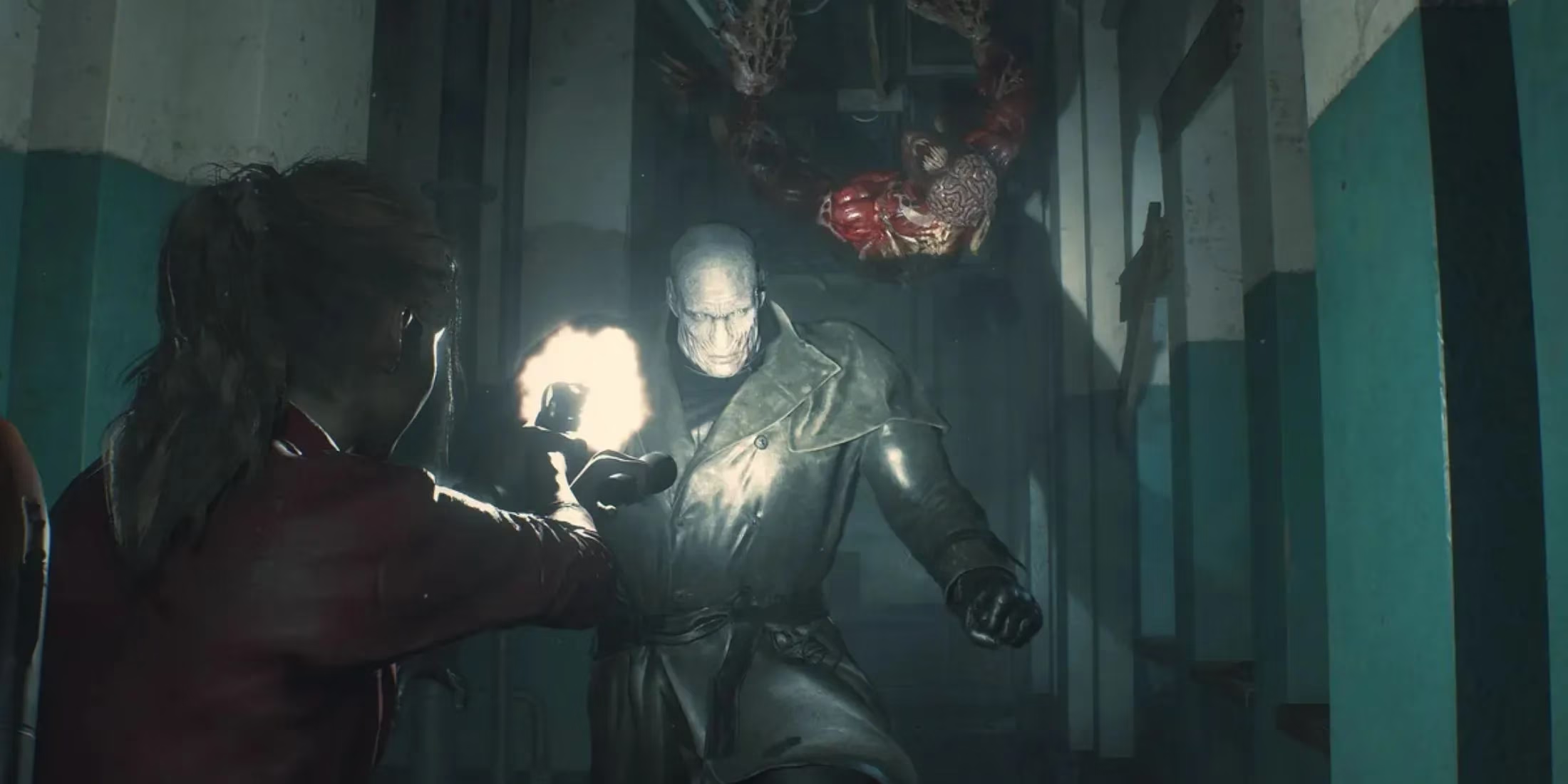
This discovery has sparked widespread admiration within the community, serving as a powerful reminder of Capcom's technical and artistic prowess. Remarkably, Resident Evil 2 was crafted for what is now considered last-generation hardware. Yet, it holds its own against newer, technologically advanced entries in the series like Resident Evil 4 (2023) and Resident Evil Village, which are built to fully leverage modern consoles. The fact that such intricate details—details most players are desperately trying to avoid while running for their lives—were painstakingly implemented speaks volumes about the developers' commitment to immersion. Fan reactions have been filled with awe and gratitude, celebrating the fact that these details exist at all, hidden in plain sight amidst the chaos and decay.
This revelation does more than just praise a past achievement; it directly fuels the soaring expectations for the franchise's future, particularly for the highly anticipated Resident Evil 9. The series has consistently evolved its enemy design philosophy:
🔍 Resident Evil 7: Biohazard introduced the haunting, fungal Molded, a departure from traditional viral zombies.
🔍 Resident Evil Village shifted to gothic horror with fast, ferocious Lycans, though fans noted they vanished quickly after combat.
🔍 Resident Evil 2 (2019) set a gold standard for persistent, detailed enemies whose bodies tell a story long after they fall.
This progression places Resident Evil 9 at a fascinating crossroads. Will Capcom pull from its deep reservoir of classic bioweapons, or will it introduce a terrifying new concept altogether? The fan response to the bite mark detail strongly suggests that, regardless of the direction, the community will be scrutinizing the new foes for a similar level of narrative depth and visual fidelity. The expectation is no longer just for scary monsters, but for believable ones—entities whose design informs their origin, behavior, and place in the game's world.
The implications of this attention to detail extend beyond simple aesthetics. It creates a more cohesive and terrifying gameplay experience. Consider the comparison:
| Enemy Type (Game) | Persistence | Visual Detail | Narrative Integration |
|---|---|---|---|
| Zombies (RE2 2019) | High - Bodies remain | Exceptional - Unique wounds, decay | High - Tells individual victim stories |
| Lycans (RE Village) | Low - Often disappear | High - But less environmental storytelling | Moderate - Linked to lore, less personal |
| Molded (RE7) | Moderate | High - Uniform, thematic decay | High - Central to the game's mystery |
As the series moves forward into 2025 and beyond, the benchmark is clear. The next chapter must be an ambitious release that pushes the boundaries of survival horror, not just in scale or story, but in the density of its world-building. The silent storytelling found in a zombie's bite mark is a powerful tool. It rewards observant players, deepens the atmosphere, and showcases a developer's dedication to their craft. While official details on Resident Evil 9 remain shrouded in mystery, one fan hope is certain: that the horrors waiting in the shadows will be rendered with the same loving, terrifying detail that made Raccoon City's zombies so unforgettably real. The legacy of Resident Evil 2's design ensures that the future of fear will be in the details.