The Future of Horror Remakes: Silent Hill vs Resident Evil in 2026
You know, as I sit here in 2026 thinking about the horror gaming landscape, I can't help but marvel at how intertwined the legacies of Silent Hill and Resident Evil have become. It's fascinating, really. Both franchises have taken wildly different paths, yet they're constantly compared, contrasted, and held up as the twin pillars of survival horror. With Silent Hill finally stepping back into the spotlight after years of dormancy, and Resident Evil continuing its remake renaissance, we're living through what might be the most interesting era for both series since their PlayStation heyday.
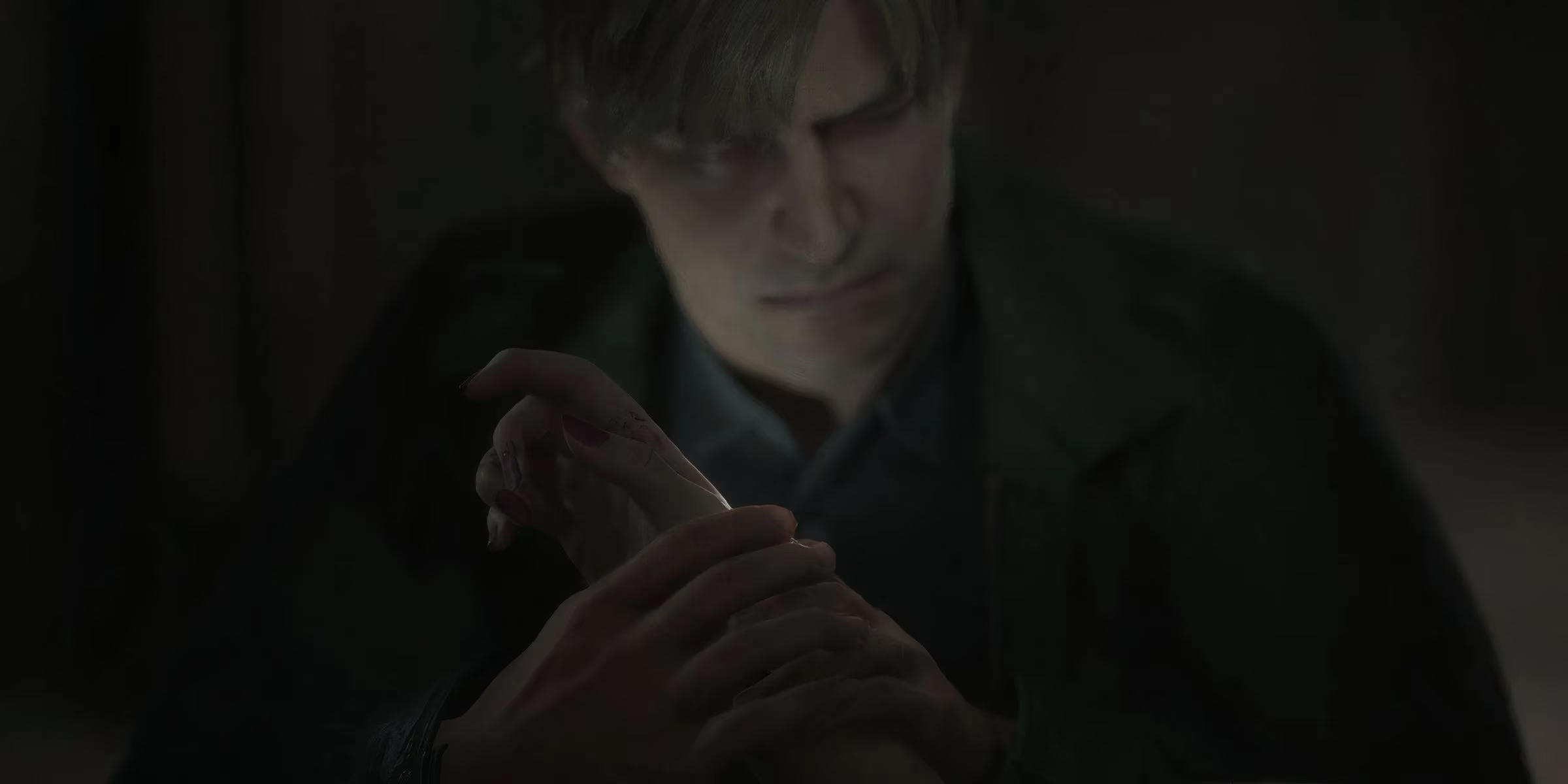
Let me start with Silent Hill, because honestly, its comeback story is nothing short of miraculous. Here's a franchise whose most beloved games—the original trilogy—came out over two decades ago. Yet despite years of disappointing releases and radio silence from Konami, the fanbase never truly died. We kept the candles burning in our virtual foggy towns, discussing theories about Pyramid Head and the Order long after Konami seemed to have moved on. Now, with the Silent Hill 2 remake finally here after years of anticipation, it feels like we're witnessing a phoenix rising from ashes.
But here's where things get tricky for Silent Hill's remake strategy. Starting with Silent Hill 2 is... well, it's a bold choice, to say the least. Imagine introducing someone to the Harry Potter series by having them read "The Prisoner of Azkaban" first—that's essentially what Konami's doing. The remake serves as an amuse-bouche, as some have called it, meant to whet appetites for what's to come. But without the foundational context of the first game, new players might find themselves lost in the fog, both literally and narratively.
This creates a domino effect for potential future remakes:
-
Silent Hill 3 becomes narratively disconnected without the first game's remake
-
Shattered Memories loses its powerful commentary without the original's context
-
The entire lore becomes a tangled web for newcomers
Meanwhile, over in the Resident Evil camp, Capcom has been executing what can only be described as a masterclass in franchise management. They've systematically remade their classic titles, starting with the GameCube remake of the original Resident Evil, then moving through 2, 3, and most recently, 4. Each remake has been a commercial and critical success, proving that there's massive appetite for revisiting these horror classics with modern technology and design sensibilities.
What's particularly impressive about Capcom's approach is their willingness to reimagine rather than simply recreate. The Resident Evil 2 remake completely overhauled the camera perspective and gameplay systems while maintaining the spirit of the original. Resident Evil 4's remake refined the controls and pacing for modern audiences. They're not just giving these games a fresh coat of paint—they're genuinely rethinking how they should play in 2026.
And the pipeline shows no signs of slowing down! The rumors have been circulating for years about what's next:
| Rumored Remake | Why It Makes Sense |
|---|---|
| Resident Evil 0 | Fixes the partner system, expands Rebecca's story |
| Code: Veronica | Brings a fan-favorite to modern consoles |
| Resident Evil 5 | Addresses controversial elements, improves co-op |
| Resident Evil 6 | Streamlines the messy multiple campaigns |
This brings me to a crucial difference between the two franchises' approaches. Resident Evil has the luxury of abundance—there are simply more games to remake, giving Capcom a longer runway for their remake strategy. Silent Hill, by comparison, has a much smaller catalog. If Konami sticks to remaking only the universally acclaimed titles, they'll run out of material much faster.
But here's what gives me hope for Silent Hill's future: the franchise isn't putting all its eggs in the remake basket. We have Silent Hill f promising a completely new story set in 1960s Japan, and Silent Hill: Townfall exploring different aspects of the series' mythology. These new entries could be the key to Silent Hill reinventing itself for a new generation, independent of its remake efforts.
I find myself wondering about the long-term implications of these remake strategies. For Resident Evil, remakes have become a sustainable part of their release cycle—a way to fill gaps between major new entries while introducing classic stories to new players. For Silent Hill, remakes feel more like a necessary reintroduction, a way to prove to both fans and Konami itself that the franchise still has value.
The financial reality can't be ignored either. Resident Evil remakes have been printing money for Capcom, with each release selling millions of copies. Konami has undoubtedly noticed this, and the success (or failure) of the Silent Hill 2 remake will likely determine whether we see more remakes or if the company pivots entirely to new content.
Personally, I'm excited by what both approaches bring to the table. Resident Evil's methodical, almost industrial approach to remakes ensures we get polished, high-quality experiences that respect the source material while embracing modern design. Silent Hill's more experimental, piecemeal approach—mixing remakes with completely new games—could lead to more creative risks and unexpected directions.
As we look toward the rest of the decade, I can't help but feel optimistic. We're living in a golden age of horror gaming where both these titans are active simultaneously. Whether you prefer the more action-oriented, B-movie charm of Resident Evil or the psychological, symbolic horror of Silent Hill, there's something for everyone. And in 2026, with gaming technology more advanced than ever, both franchises have the tools to create experiences that surpass even our fondest memories of their classic entries.
So here's my final thought: maybe the competition between these two approaches isn't a zero-sum game. Maybe Resident Evil's success with remakes paves the way for Silent Hill to find its footing. Maybe Silent Hill's willingness to experiment with new ideas inspires Resident Evil to take more risks with its own new entries. In the foggy, zombie-infested world of survival horror, there's room for both philosophies to thrive—and as a fan, I couldn't be happier about that.