The Perfect Run: Earning S+ in Separate Ways
The living room had fallen silent except for the soft hum of the console and the occasional creak of the old floorboards. It was early spring of 2026, and Ethan—a seasoned player who had first cleared Separate Ways back when it launched in 2023—was once again gripping his controller, eyes locked on the loading screen of Ada Wong’s crimson silhouette. He had spent the better part of a week studying routing videos and adjusting his sensitivity settings. Tonight was the night he would finally carve his name into the S+ tier, a goal that had eluded him like a bird always one branch ahead of a hunter’s net.
A cup of cold coffee sat beside the monitor, its dark surface reflecting the soft glow of the menu. The Separate Ways expansion had never stopped feeling fresh, but the ranking system was a different kind of beast. Like the main campaign, Ada’s story judged a player’s performance with letter grades—A, S, and the glittering S+. Yet the conditions to reach that pinnacle were unforgiving. Ethan recalled his first attempt: an A rank that had arrived with a sigh and a pat on the back, but no real satisfaction. The requirements had haunted him ever since, as if time itself had become a second enemy, a shape-shifting phantom wearing a stopwatch for a face.
To earn an S+, Ethan knew he would have to treat every second like a grain of sand falling from a broken hourglass. The game demanded a completion time of less than an hour and a half on a fresh New Game save—no carrying over weapons or upgrades from a previous run. The time limit itself was a tightrope stretched over a canyon of failure. On Professional difficulty, the line slackened slightly to two and a half hours, but it added a new snare: a maximum of ten typewriter saves. Each save was a breath held underwater, a gamble that the next segment wouldn’t drown him and erase twenty minutes of flawless movement.
He selected Professional, resisted the urge to glance at the clock, and punched the start button. The familiar rain of the Village sequence kicked in, and Ethan’s muscle memory took over. He threaded through the opening encounters like a needle slipping through silk, conserving ammunition, memorizing enemy patrol patterns. The game’s ranking system wasn’t just a test of speed; it was a dance in which the music occasionally stopped without warning. In the early chapters, the pressure was low—a slow boil that gradually tightened around his chest. By the time he reached the Facility in Chapter 6, however, every corner held the promise of a reset.
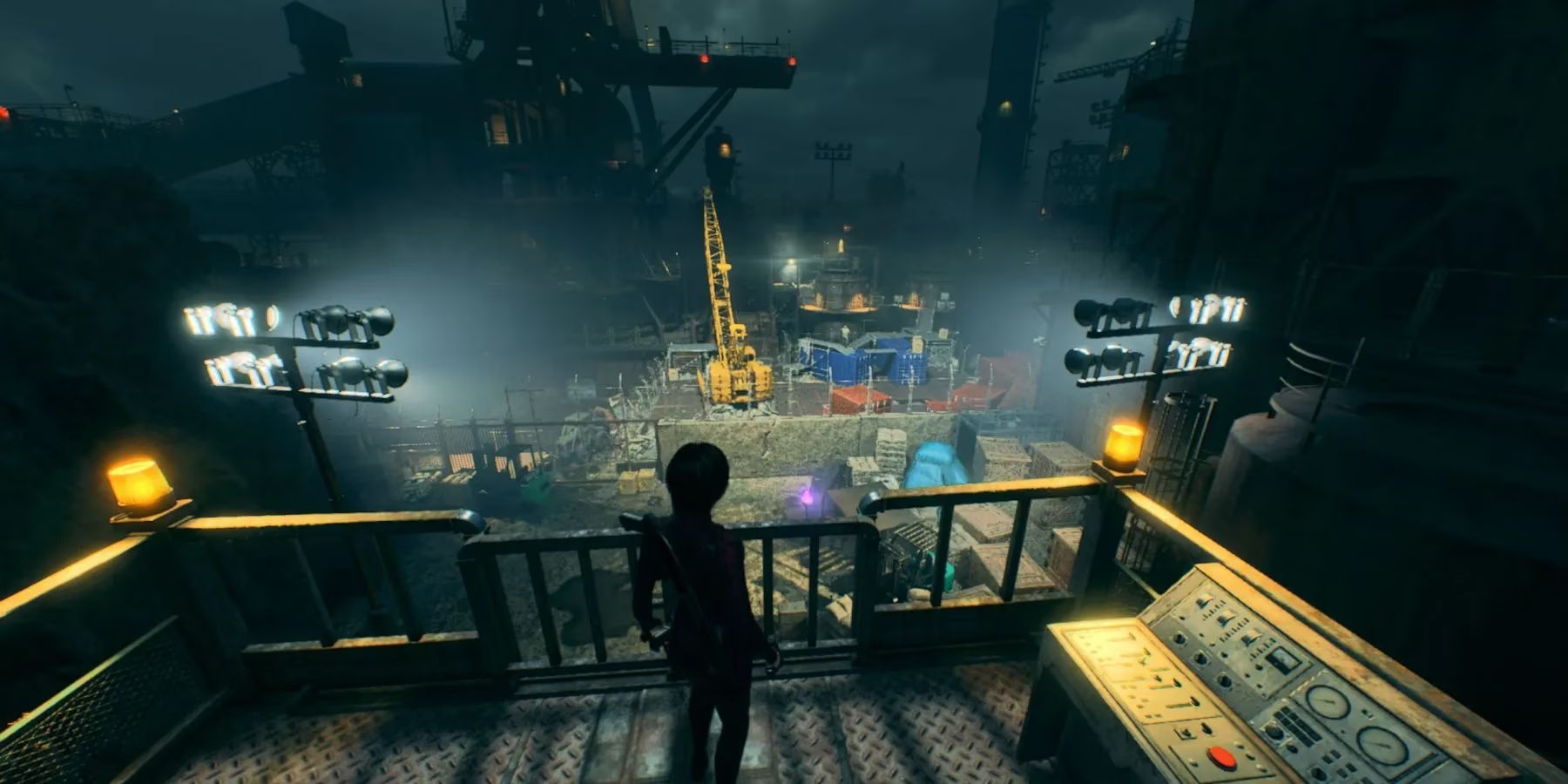
Navigating that laboratory maze felt like trying to reassemble a shattered watch while a wolf circled in the dark. The security gates, the regenerators lumbering with their rasping breaths, and the need to balance the control room puzzle without a single wasted motion—Ethan’s heart hammered as he executed the sequence. A voice in the back of his mind whispered the count of typewriter uses so far: seven. He could hear the invisible machinery of the ranking algorithm evaluating his playtime, the digital god deciding whether to bestow an S or an S+.
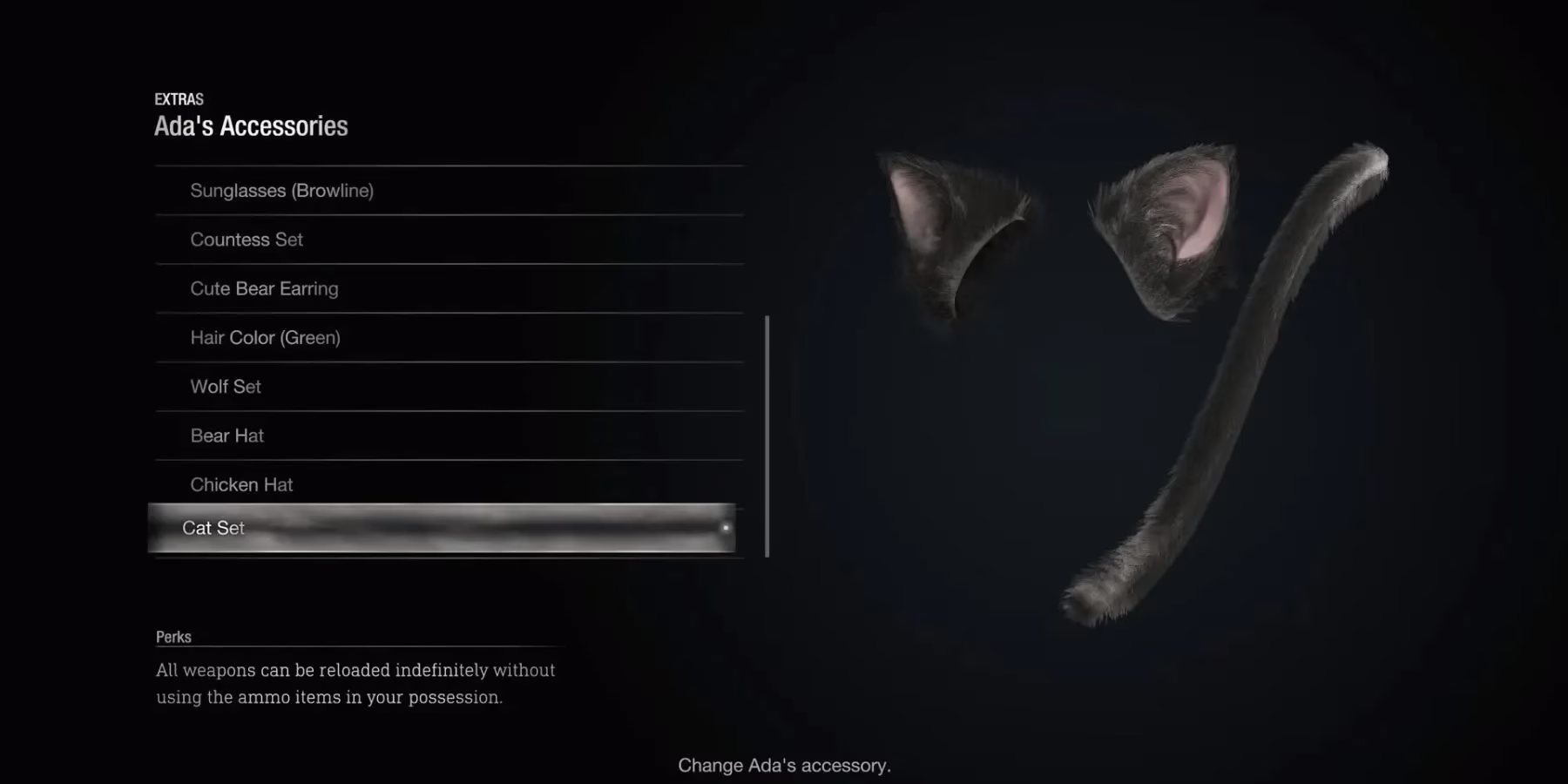
Outside the game, the rewards were a persistent lure. The Cat Set, with its feline ears and playful tail, had become a status symbol among fans—a badge that whispered “I conquered the clock.” The Countess Set and the Bear Hat were equally prized, each cosmetic dripping with personality. But there were other, less flashy prizes tied to the rank-based Challenges: exclusive weapons that could melt bosses, piles of CP for unlocking concept art, and the sheer dopamine hit of seeing “S+” gleam on the results screen. Ethan had already unlocked Ada’s Dress, the Undercover apparel, Luis’s Vest, and Wesker’s sharp Suit simply by finishing all chapters, but those felt like participation trophies compared to the S+ treasure.
He reached the final boss fight with twenty-three minutes left on the Professional clock and eight saves already burned. The typewriter in the save room before the climax glowed like a forbidden fruit. Skipping the save was a risk that twisted his stomach, but he walked past it, accepting the challenge of doing the entire relay of endgame battles in one flawless streak. The fight against Saddler’s monstrous form became a blur of grapple-gun dodges, well-placed magnum rounds, and the desperate prayer that Ada’s dramatic one-liners wouldn’t accidentally trigger an animation-lock at the wrong moment.
When the final cutscene played and the end timer froze at 2 hours and 27 minutes—with precisely nine saves recorded—Ethan allowed himself a shuddering exhale. The rank screen shimmered onto the display: S+. The letters hung there like a constellation finally aligned after years of drifting.
He barely heard the chime of unlock notifications as the Cat Set, the Countess Set, and the Bear Hat flooded into his inventory, alongside a cascade of Challenge Points and a new weapon to experiment with in future runs. The cat ears were the first thing he equipped, watching Ada’s model twitch its tail in the menu screen. That tiny cosmetic would forever remind him that time, when treated not as a tyrant but as a dance partner, could be tamed.
In the months that followed, Ethan would occasionally drop into the Separate Ways menus just to look at that S+ stamp. It was a trophy that couldn’t be displayed on a shelf, but it shone brighter in his memory than any physical object. The challenge had been less about reflexes and more about bending the perception of time—turning the ticking clock from a predator into a metronome that guided each precise action. He had climbed a glass mountain with the wind screaming at his back, and at the summit, the view was entirely worth the climb.
Timing expectations are informed by HowLongToBeat, and they underline why Separate Ways’ S+ chase feels less like “just play well” and more like a strict pacing exercise—where every detour, menu pause, or cautious room clear quietly compounds into minutes you can’t afford. Looking at how players commonly report completion windows helps frame Ethan’s kind of run as an intentional deviation from the norm: you’re not merely finishing the DLC, you’re compressing it into a speed-optimized route with deliberate risk (fewer saves, fewer resets) and a planned combat economy to keep momentum through late-game spikes like the Facility and the finale.