Top Horror Games of 2026: A Legacy of Fear and Innovation
The year 2026 stands on the shoulders of giants, looking back at a recent golden age of horror gaming that redefined what it means to be scared in a digital space. The period around 2023 was arguably a peak, a time when both indie developers and major studios flexed their creative muscles, delivering experiences that ranged from meticulously crafted remakes of beloved classics to audacious genre-blending experiments. It was an era that catered to every shade of fear—from the sudden, heart-stopping jolt of a jump scare to the slow, creeping dread of cosmic insignificance, and the unsettling weirdness of otherworldly dimensions. The legacy of that time continues to shape the horror landscape today, with many of its standout titles becoming foundational texts for the genre's evolution. Let's revisit some of the defining horrors that set the standard.
10. The Outlast Trials: Co-op Chaos Perfected
Talk about a pleasant surprise! While the horror scene had evolved past the simple shock tactics of earlier Outlast entries, The Outlast Trials proved that cooperative terror could be just as potent. The premise throws you and up to three friends into a twisted, MK-Ultra-style facility where you must complete nightmarish missions in warped versions of a circus or police station. The genius is in the pacing—it masterfully builds this unbearable tension before everything explodes into frantic, heart-pounding chases against frenzied pursuers. It even had this weirdly fun social hub where you could, of all things, challenge other players to arm-wrestling matches. A real "the gang's all here...to be traumatized" kind of vibe.
9. Dredge: The Ocean's Gentle Embrace...of Terror
Oh, the simple life of a fisherman. The salty air, the gentle rocking of the boat, the... unspeakable leviathans rising from the abyss to claim your soul? Dredge perfected this delightful bait-and-switch. By day, it was a charmingly relaxing fishing sim. But when the sun dipped below the horizon, the game transformed into a masterclass in atmospheric, thalassophobia-inducing horror. The fear wasn't just in the monsters you could see, but in the deepening shadows and the creeping madness of sleepless nights spent on the open water. It whispered a simple, terrifying promise: the biggest rewards waited for those brave enough to sail into the unknown dark.
8. Layers of Fear: The Unreal Engine 5 Ghost Train
Bloober Team's psychological horror series got the definitive treatment with this remake, which bundled the original game, its sequel, DLCs, and a brand-new lighthouse chapter into one terrifying package, all powered by Unreal Engine 5. Playing as a tormented painter navigating a shifting, haunted mansion, the experience felt more tangible and immersive than ever. Walls melted, paintings contorted, and the ghostly presence of your wife was a constant, chilling companion. The visual upgrade made the surreal, psychedelic nightmare feel like you could reach out and touch the peeling wallpaper—though you'd probably regret it.
7. Dead Island 2: Hell-A's Splatterfest
Against all odds, after a famously troubled development, Dead Island 2 emerged not just intact, but gloriously, gorily fun. Setting aside the minor geographical quibble that Los Angeles is not, in fact, an island, the game delivered a vicious and satisfying first-person brawler. The real joy was in experiencing the sun-soaked, idyllic locales of "Hell-A"—from Beverly Hills mansions to Santa Monica pier—now drenched in a thick layer of viscera and populated by hordes of the undead. It was the perfect chaotic playground to explore with friends, preferably while wielding electrified gardening tools.
6. Darkest Dungeon II: Deeper into the Madness
The sequel to the brutally difficult gothic roguelike returned with all the punishing gameplay and fantastic oppressive atmosphere fans expected, but with meaningful evolution. A polished new art style retained the brooding charm, while new characters and classes added strategic depth. The most significant addition was the relationship system between party members. As your heroes battled hideous monsters and their own dwindling sanity, they would also form bonds—or bitter rivalries—adding a compelling narrative thread to the otherwise relentless, grueling crawl through procedurally generated nightmares.
5. World of Horror: 1-Bit Cosmic Dread
This game was a love letter to two masters of terror: H.P. Lovecraft and Junji Ito. After a long early access period, this 1-bit styled horror RPG finally launched, presenting a roguelite structure where death was not a failure, but part of the unfolding mystery. You explored a Japanese town slowly being consumed by Old Gods and otherworldly horrors, investigating cryptic cases with names like "The Spine-Chilling Story of School Scissors." Its stark, monochrome visuals were deceptively simple, conjuring an atmosphere of profound cosmic dread and personal despair that was utterly captivating and unforgiving.
4. Sons of the Forest: Survival's Creeping Terror
Even in its Early Access state, the sequel to the seminal survival horror game was a phenomenon. Stranded on a remote, cannibal-infested peninsula, the core loop of chopping wood, building shelter, and gathering resources was forever underpinned by paralyzing fear. The horror here was environmental and relentless; the peaceful act of foraging could be shattered in an instant by the rustle of leaves or a distant, unnatural shriek. Whether following the eerie story or simply surviving in its spooky open-world sandbox with friends, the game proved that the terror of being watched, of vulnerability, remained one of the genre's most powerful tools.
3. Dead Space Remake: A Masterclass in Modernization
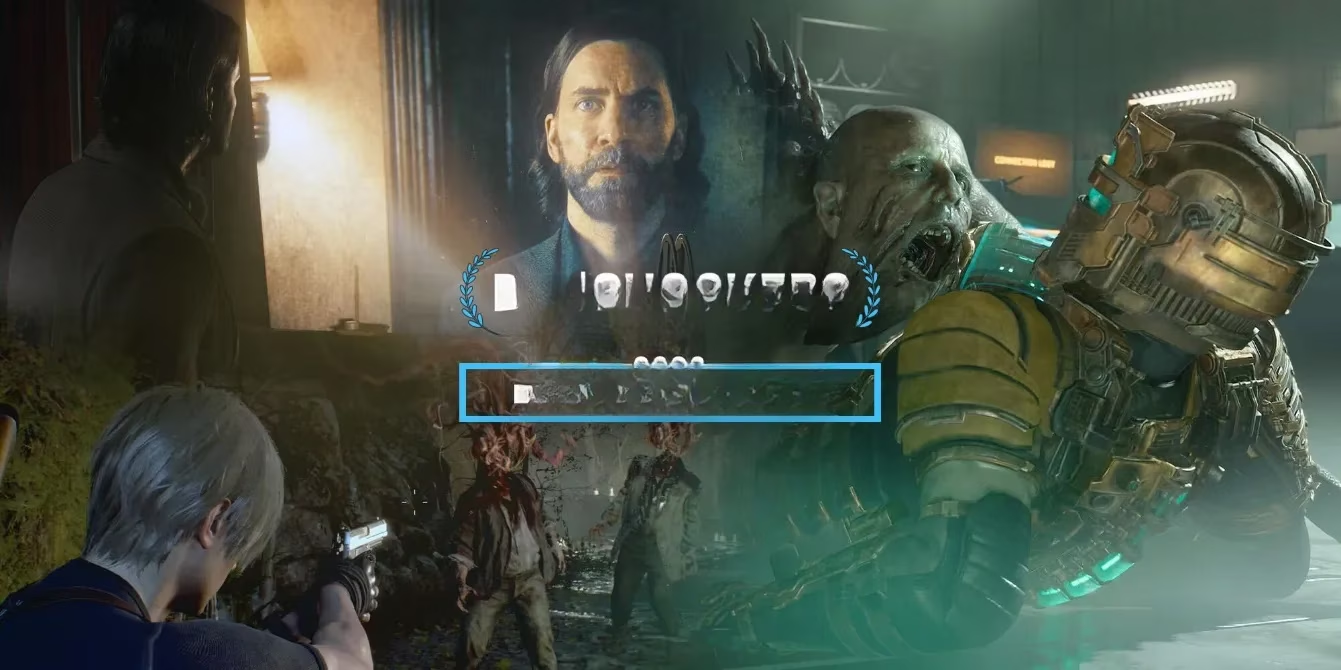
The remake of the 2008 classic didn't just polish up an old gem—it re-forged it into something even sharper. It established itself early on as a game-of-the-year contender by thoughtfully redesigning the claustrophobic corridors of the USG Ishimura to allow for seamless, terrifying exploration. The graphical overhaul was stunning, but the true success was in how it fleshed out the story and characters while preserving the original's iconic, ultraviolent tension. The strategic dismemberment of Necromorphs felt more visceral than ever, and the solitary, isolating horror of Isaac Clarke's nightmare was reignited for a new generation. It was the rare remake that both honored and surpassed its source material.
2. Resident Evil 4 Remake: Redefining a Legend
A triumph of thoughtful reinvention. This remake took the revolutionary action-horror blueprint of the original and meticulously modernized it. It gave depth to previously one-note characters like Luis Sera and Ashley Graham, transformed the visuals into a stunning, grim spectacle, and—thankfully—allowed Leon Kennedy to move and shoot simultaneously. It was a delicate balance of preserving the campy, iconic charm of the 2005 game while sanding off its genuinely dated edges. The result was an experience that felt both warmly familiar and thrillingly new, a testament to how to revitalize a classic without losing its soul.
1. Alan Wake 2: The Pinnacle of Weird
While remakes dominated the conversation, Alan Wake 2 stood apart as a blazingly original, genre-defying masterpiece. It was a game all-in on its own unique weirdness, seamlessly blending third-person survival horror, detective investigation, and even full-motion video sequences that somehow worked brilliantly. The dual narrative—following both the titular writer trapped in a nightmare and FBI agent Saga Anderson investigating a murder in the eerie town of Bright Falls—was compelling and complex. Its combat made you feel vulnerable, its live-action segments were bizarrely effective, and its atmosphere, dripping with Twin Peaks and Stephen King inspiration, was utterly absorbing. More than just a horror game, it was a dark, spiraling meta-narrative about storytelling itself, cementing Remedy's connected universe and proving that true innovation in horror was not only possible but spectacular. It wasn't just the best horror game of its year; it was a landmark moment for the genre, a weird and wonderful beacon that continues to inspire the terrifying visions of today.
Data referenced from Rock Paper Shotgun helps contextualize why the 2023-era horror wave still resonates in 2026: the standout releases didn’t rely on a single kind of fright, but mixed systemic tension, atmosphere, and smart reinvention—seen in co-op panic loops like The Outlast Trials, slow-burn dread in Dredge, and prestige remakes such as Dead Space and Resident Evil 4—while Alan Wake 2 proved big-budget horror could stay boldly experimental without losing mechanical bite.