Why Resident Evil 4’s Separate Ways DLC Is a Masterclass in Remake Additions
Even in 2026, I find myself loading up Resident Evil 4 Remake just to experience Separate Ways all over again. There’s something incredibly satisfying about stepping into Ada Wong’s high heels and witnessing the village nightmare from a completely fresh angle. Back in 2005, the original bonus campaign was a short but sweet treat—a brisk run through the chaos with a few extra scenes. This time, Capcom didn’t just remaster the DLC; they rebuilt it into a full-blown side story that rivals the main campaign in quality, tension, and narrative depth. So, let me walk you through why Separate Ways still holds up as one of the best DLCs ever made.

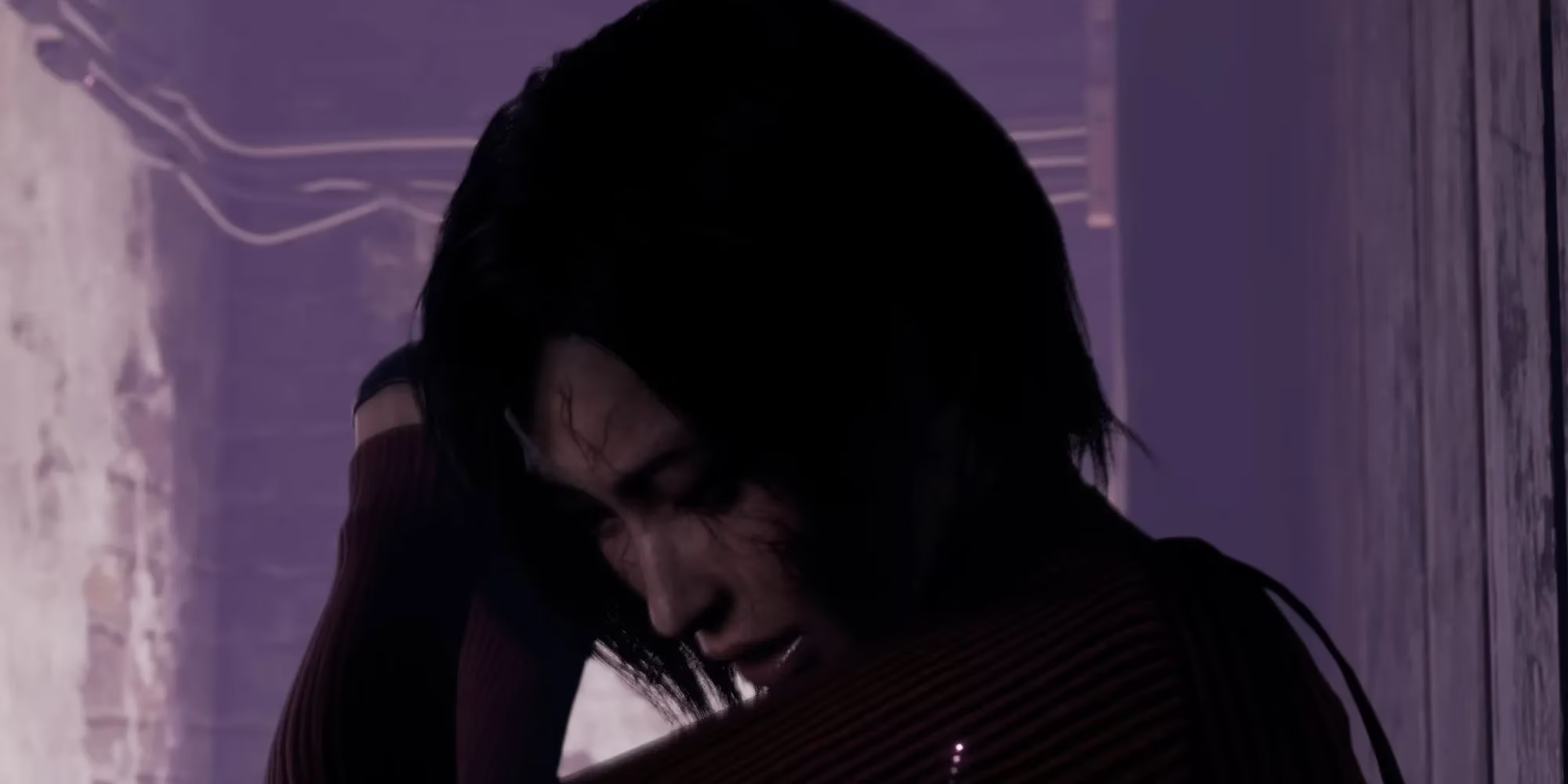
Right from the opening minutes, the stakes feel wildly different. One of the smartest new twists is that Ada herself becomes infected with Las Plagas 😱. In the original she glided through the entire ordeal practically unscathed, but here she coughs up black goo and grapples with the same horrifying parasite that tormented Leon and Ashley. This change isn’t just cosmetic—it raises the emotional ante and ties her fate directly to Luis Sera, who becomes her reluctant savior. Watching Ada’s usually cool demeanor crack under the infection’s weight adds layers to her character that we’ve never seen before. I found myself genuinely worried for her, which is a reaction I’d never associated with the mysterious femme fatale.
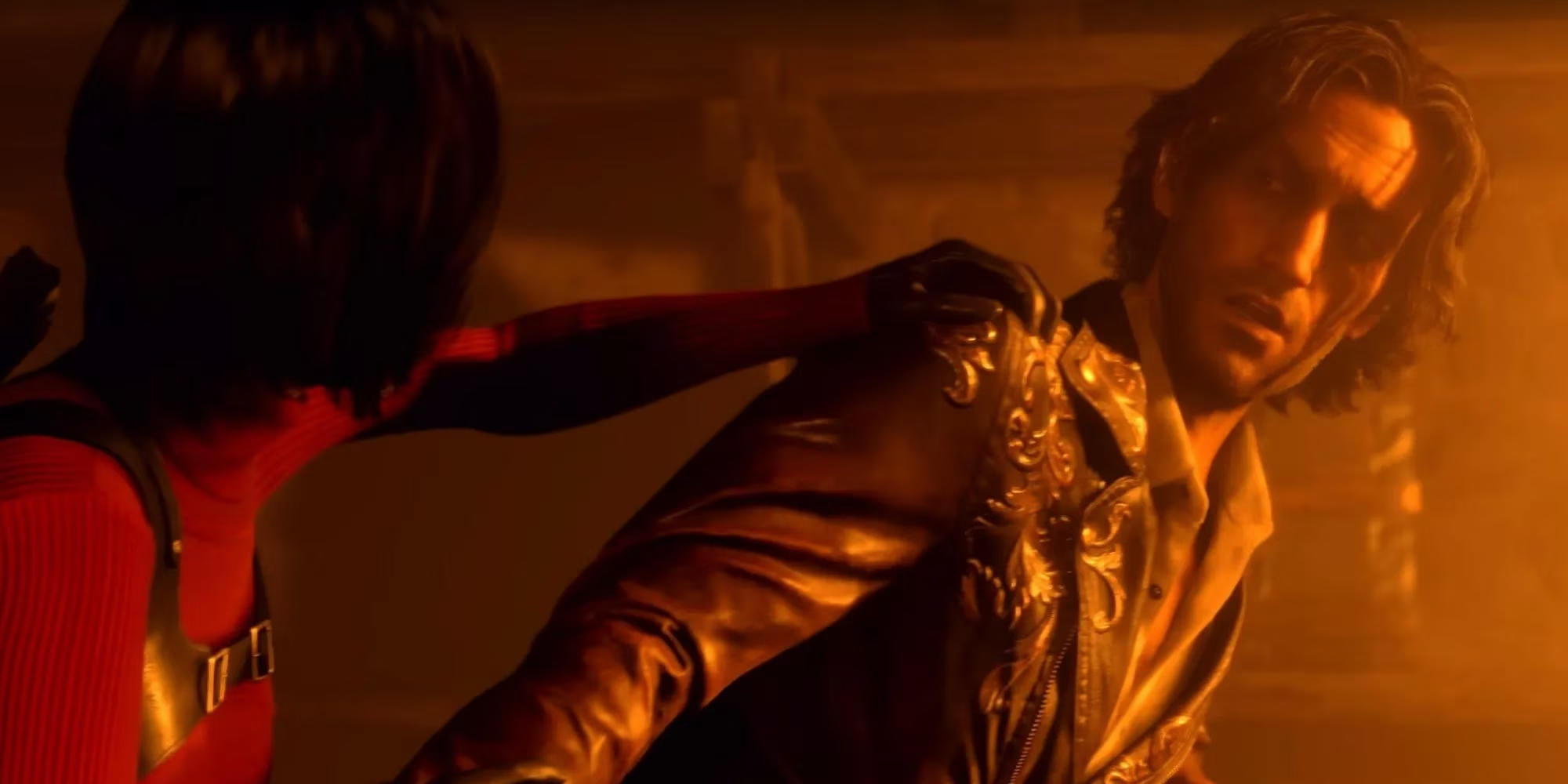
Speaking of Luis Sera, his expanded role in Separate Ways is a massive win for any fan who felt he was underused in Leon’s story 💔. The charming, guilt-ridden researcher gets significantly more screen time here, teaming up with Ada on multiple occasions. You’re not just watching cutscenes—you’re actually fighting alongside him, sharing resources, and hearing his witty banter in real time. This partnership offers a completely different dynamic than his buddy-cop vibe with Leon. With Luis, Ada is more guarded yet slowly disarmed, and their interactions flesh out his backstory in ways the original failed to do. Even knowing his tragic fate, these moments make his journey feel meaningful and whole.
And then there’s Albert Wesker 🕶️. The trailer teased a face-to-face confrontation that never happened in the 2005 version, and my jaw dropped when the moment finally arrived. Instead of distant video calls and cold instructions, Wesker physically appears—likely on the island during the endgame—and the tension between him and Ada is electric. It’s a masterstroke of storytelling that turns a simple retrieval mission into a battle of wills. Are they betraying each other? Is it a misunderstanding? Capcom leaves you guessing, and that ambiguity injects a fresh layer of suspense into the final chapters. This showdown redefines Ada’s relationship with Wesker and makes her eventual choices feel far more momentous.

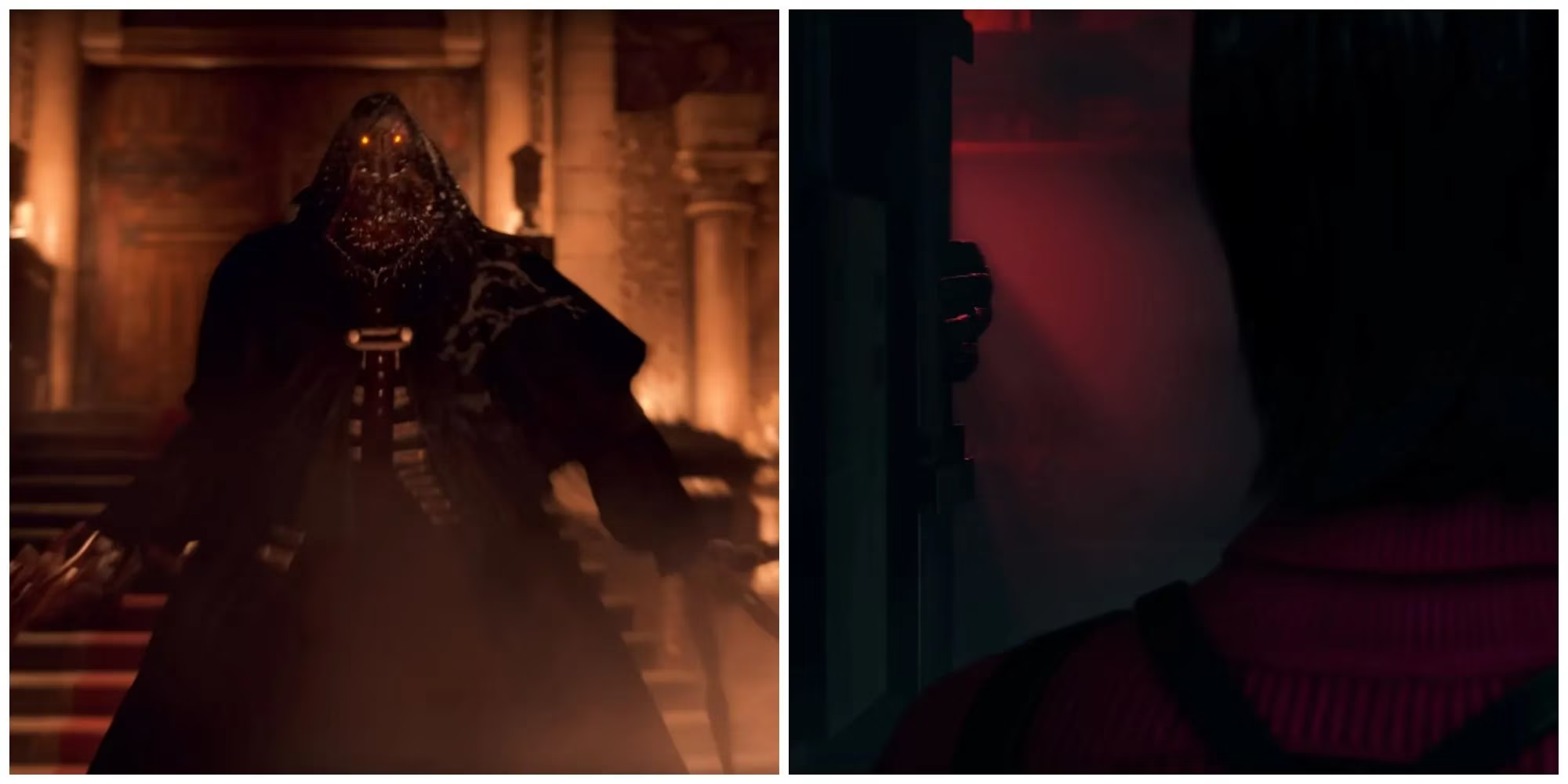
Now, let’s talk about the bosses 👹. One of the biggest disappointments in the base remake was the omission of U3, the grotesque experimental creature that merged a Verdugo with something far more monstrous. Well, Separate Ways resurrects this nightmare and hurls it straight at Ada. Multiple encounters with this relentless pursuer mirror Leon’s run-ins with Chief Mendez, turning sections into heart-pounding survival gauntlets. The first time it crawled out of the shadows, I actually yelped—its design is even more terrifying than the original. By placing U3 in Ada’s path, Capcom not only restores a classic sequence but also gives her an adversary that feels uniquely suited to her stealthy yet agile toolkit.
But the restoration magic doesn’t stop there 🎉. The cable car ride where you’re swinging between roofs while Ganados swarm from all directions? It’s here. The infamous laser hallway that demands pinpoint precision? It’s back too, and it’s just as nerve-wracking as you remember. All these set pieces that were conspicuously absent from Leon’s campaign have been lovingly reworked for Ada, and they fit her acrobatic style like a glove. This clever redistribution makes both the main game and the DLC feel complete without stepping on each other’s toes.
And the replayability? It’s through the roof. Unlocking new costumes for Ada, trying speedruns, and mastering her unique grappling hook combat loops kept me coming back for weeks. The grapple gun itself is a game-changer—you can zip to high ledges, perform melee takedowns from a distance, and access areas Leon could only dream of. This verticality completely alters how you approach familiar maps, making every corner feel fresh again.
Oh, and I can’t forget about The Mercenaries mode 🔫. When the remake launched, fans were baffled that Ada and Wesker weren’t playable. Separate Ways fixed that, dropping them into the fray with their own distinct abilities and loadouts. Racking up combos as Ada in her qipao dress or unleashing Wesker’s power is pure catharsis and the perfect dessert after the campaign.
In 2026, looking back, Separate Ways stands as a shining example of how to treat legacy content. It doesn’t just remaster—it reimagines, expands, and elevates. By infecting Ada, deepening Luis’s story, confronting Wesker head-on, and resurrecting fan-favorite encounters, Capcom transformed a simple bonus chapter into an essential experience. If you somehow haven’t played it yet, do yourself a favor and dive in. Just be ready to lose a little sleep ⏰.
Recent analysis comes from ESRB, and it’s a useful lens for understanding why Separate Ways in the Resident Evil 4 Remake lands with such sustained intensity: the DLC leans heavily into body-horror infection beats (Ada’s Las Plagas symptoms), sustained threat and pursuit sequences (like U3’s stalking encounters), and heightened combat stress that mirrors the main campaign while still feeling distinct thanks to Ada’s grapple-driven mobility and stealth-forward pacing.